Draft version
In this entry we present the latest estimates of mental health disorder prevalence, disease burden rates, and mortality impacts across a number of disorders. We address substance use disorders (alcohol and drug use disorders) in a separate entry on Substance Use.
Most of the estimates presented in this entry are produced by the Institute for Health Metrics and Evaluation and reported in their flagship Global Burden of Disease study.
Mental health and substance use disorders are still significantly under-reported. This is true across all countries, but particularly at lower incomes where data is more scarce, and attention and treatment for mental health disorders are significantly lower.
Mental health disorders are complex and can take many forms. The underlying sources of the data presented in this entry apply specific definitions (which we describe in each relevant section), typically in accordance with WHO's International Classification of Diseases (ICD-10). This broad definition incorporates many forms, including mental health disorders (depression, anxiety, bipolar, eating disorders and schizophrenia), as well as neurodevelopmental disorders, including autism, attention deficit hyperactivity disorder (ADHD), and developmental intellectual disabilities. The presentation of this diverse range of disorders, as categorised by the World Health Organization does not imply that they are comparable, or that their impacts and potential approaches of support or treatment should be treated similarly.
The complexity of mental health disorders means that the use of such definitions are also likely to underestimate its prevalence; many cases will undoubtedly fall outwith these definitions, but does not preclude them from being recognised as mental health disorders.
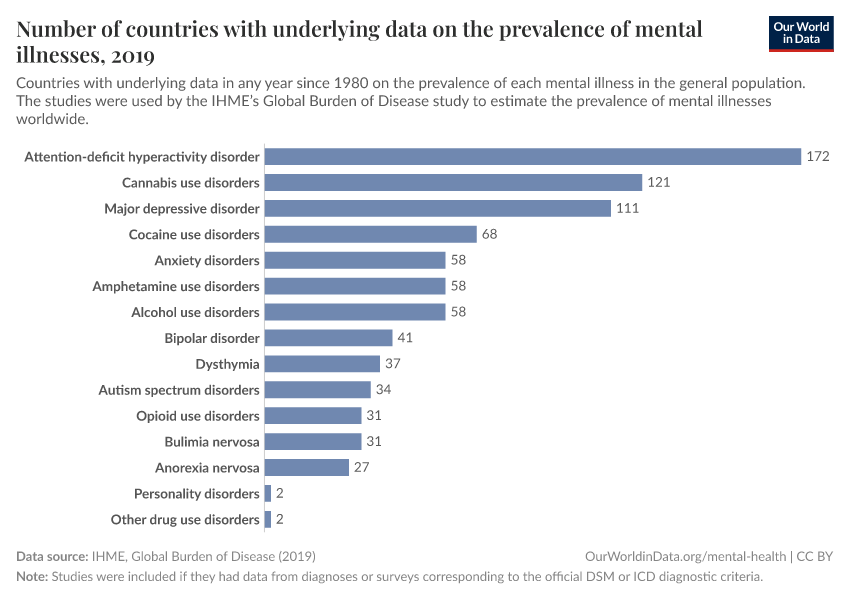
Mental health disorders remain widely under-reported — in our section on Data Quality & Definitions we discuss the challenges of dealing with this data. Figures presented in this entry should be taken as estimates of mental health disorder prevalence — they do not strictly reflect diagnosis data (which would provide the global perspective on diagnosis, rather than actual prevalence differences), but are imputed from a combination of medical, epidemiological data, surveys and meta-regression modelling where raw data is unavailable. Further information can be found here.
In many cases, we may therefore consider reported estimates to be an under-estimation of true prevalence and disease burden. It is also important to keep in mind that the uncertainty of the data on mental health is generally high so that one should be cautious about interpreting changes over time and differences between countries. Even taking into account that mental health disorders are likely underreported, the data presented in this entry demonstrate that mental health disorders are common and have a high prevalence. Improving awareness, recognition, support and treatment for this range of disorders should therefore be an essential focus for global health.
I. Empirical View
I.1 Prevalence of mental health and neurodevelopmental disorders
The category of mental health and substance use disorders comprises a range of disorders including depression, anxiety, bipolar, eating disorders, schizophrenia, intellectual developmental disability, and alcohol and drug use disorders. Full definitions of disorders used by the Institute for Health and Metrics Evaluation (IHME) can be found in the relevant disorder section of this entry.
In this entry, we focus only on mental health and neurodevelopmental disorders — specific data on alcohol and drug use disorders can be found in our entry on Substance Use. You can find statistics on the combined prevalence of all of these disorders (including substance use) here – as can be seen this linked world map, across most countries, approximately 15-20 percent of the population are experiencing a mental health and/or substance use disorder. This equates to every fifth or sixth person.
The map below excludes substance use disorders and reports the estimated share of the population with at least one of the range of mental health and neurodevelopmental disorders. Across the world, mental health disorders are very common. The highest reported prevalence is Iran, Australia and New Zealand, where around every 5th or 6th person is experiencing one or more within this group of disorders. These are, however, not large outliers – in all countries the share is higher than 10%.
The scatterplot compares the prevalence of these disorders between males and females. Taken together we see that in most countries mental health problems are more common for women than for men. However, as is shown later in this entry this varies significantly by disorder type: on average, depression, anxiety, eating disorders, and bipolar disorder is more prevalent in women. Gender differences in schizophrenia prevalence are mixed across countries, but typically more common in men.
Number of people with mental and neurodevelopmental disorders
It's estimated that, globally, close to 950 million people have a mental or neurodevelopmental disorder.1 This split between males and females is similar, with an estimated 486 million females, and 462 million males in 2016. The relative under-reporting of these disorders means it's challenging to give a highly accurate measure of this change over time. In their median estimates the IHME reports an increase from around 652 million in 1990.
You can view these statistics for any country using the "change country" function in the chart below.
I.2 Deaths from mental health and neurodevelopmental disorders
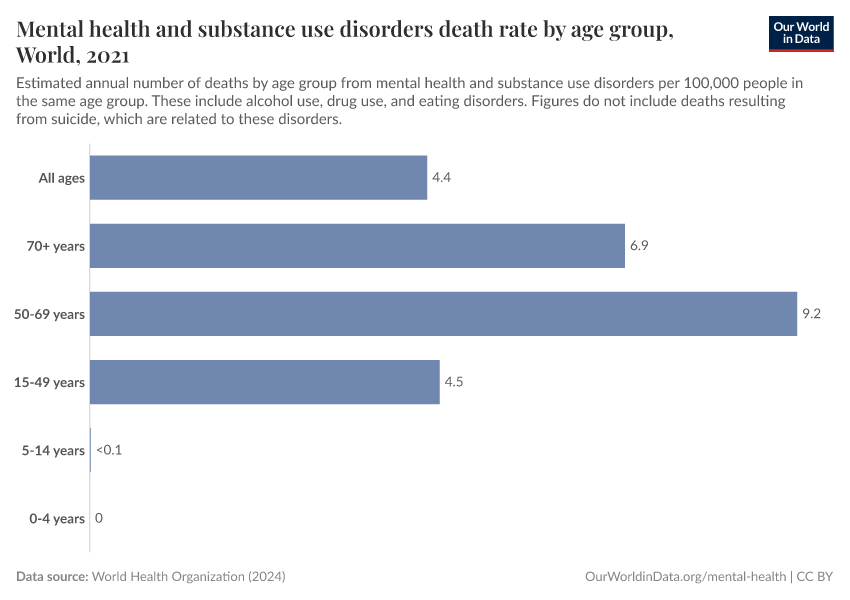
The direct death toll from mental health and neurodevelopment disorders is typically low. In this entry, the only direct death estimates result from eating disorders, which occur through malnutrition and related health complications. Direct deaths can also result from alcohol and substance use disorders; these are covered in our entry on Substance Use.
However, mental health disorders are also attributed to significant number of indirect deaths through suicide and self-harm. Suicide deaths are strongly linked — although not always attributed to — mental health disorders. We discuss the evidence of this link between mental health and suicide in detail later in this entry.
In high-income countries, meta-analyses suggest that up to 90 percent of suicide deaths result from underlying mental and substance use disorders. However, in middle to lower-income countries there is evidence that this figure is notably lower. A study by Ferrari et al. (2015) attempted to determine the share disease burden from suicide which could be attributed to mental health or substance use disorders.2
Based on review across a number of meta-analysis studies the authors estimated that only 68 percent of suicides across China, Taiwan and India were attributed to mental health and substance use disorders. Here, studies suggest a large number of suicides result from the ‘dysphoric affect’ and ‘impulsivity’ (which are not defined as a mental and substance use disorder). In such cases, understanding the nature of self-harm methods between countries is important; in these countries a high percentage of self-harming behaviours are carried out through more lethal methods such as poisoning (often through pesticides) and self-immolation. This means that in a high number of cases self-harming behaviours can prove fatal, even if there was not a clear intent to die.
As a result, direct attribution of suicide deaths to mental health disorders is difficult. Nonetheless, it's estimated that a large share of suicide deaths link back to mental health. Studies suggest that an individual with depression the risk of suicide is around 20 times higher than an individual without.
I.3 Disease burden of mental health and neurodevelopmental disorders
Health impacts are often measured in terms of total numbers of deaths, but a focus on mortality means that the burden of mental health disorders can be underestimated3
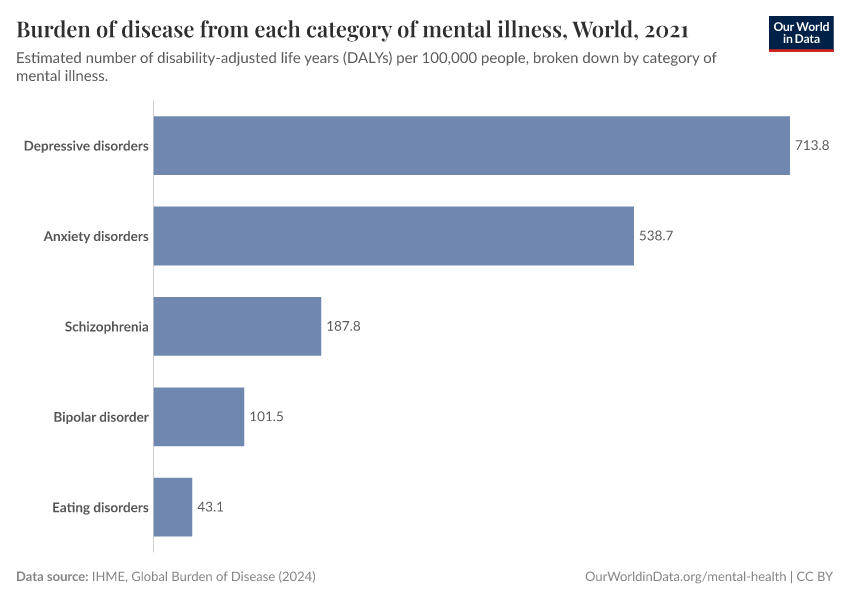
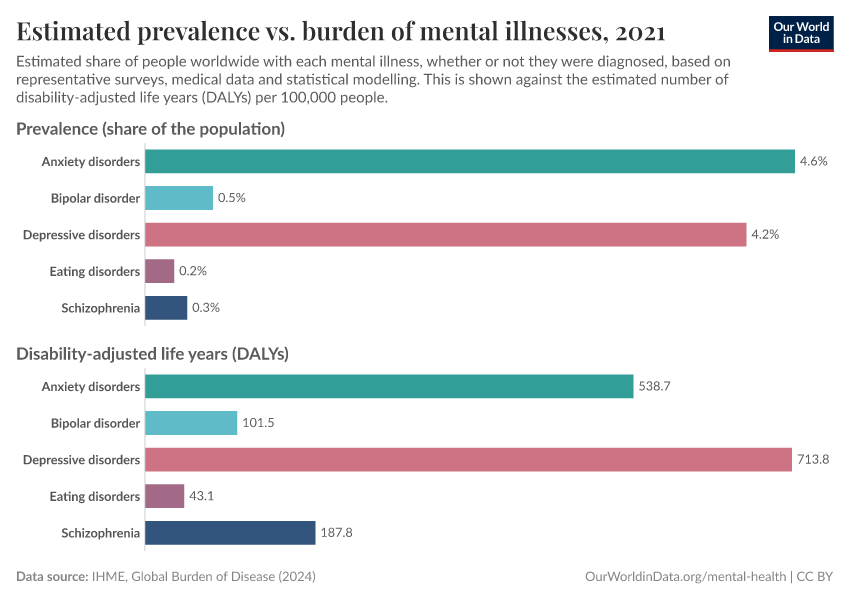
Measuring the health impact by mortality alone fails to capture the impact that mental health disorders have on an individual's wellbeing. The 'disease burden' – measured in Disability-Adjusted Life Years (DALYs) – is a considers not only the mortality associated with a disorder, but also years lived with disability or health burden. The map below shows DALYs per 100,000 people. As a share of total disease burden, mental health and neurodevelopmental disorders typically account for 7-10 percent, but up to 13 percent in some countries.
I.4 Depression
Definition of depression
Depressive disorders occur with varying severity. The WHO's International Classification of Diseases (ICD-10) define this set of disorders ranging from mild to moderate to severe. The IHME adopt such definitions by disaggregating to mild, persistent depression (dysthymia) and major depressive disorder (severe).
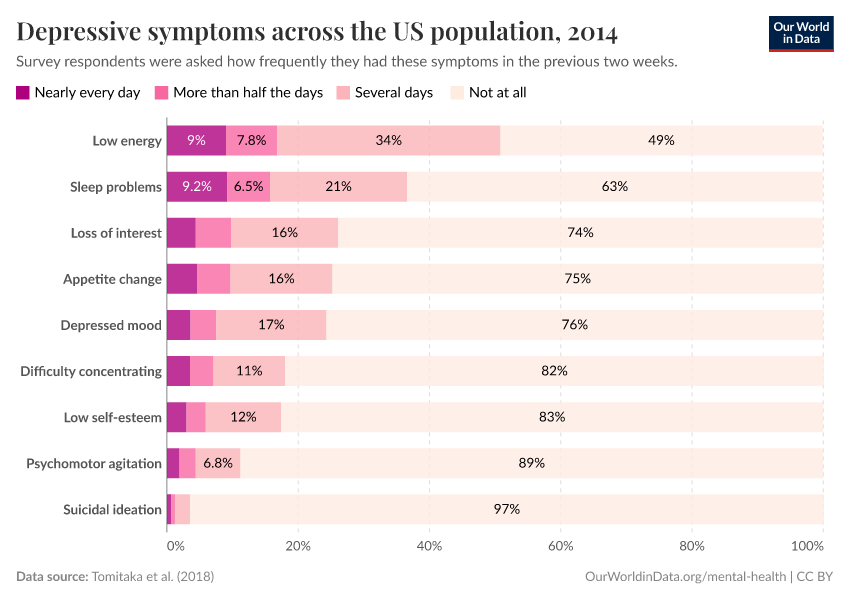
All forms of depressive disorder experience some of the following symptoms:
- (a) reduced concentration and attention;
- (b) reduced self-esteem and self-confidence;
- (c) ideas of guilt and unworthiness (even in a mild type of episode);
- (d) bleak and pessimistic views of the future;
- (e) ideas or acts of self-harm or suicide;
- (f) disturbed sleep
- (g) diminished appetite.
Mild persistent depression (dysthymia) tends to have the following diagnostic guidelines:
"Depressed mood, loss of interest and enjoyment, and increased fatiguability are usually regarded as the most typical symptoms of depression, and at least two of these, plus at least two of the other symptoms described on page 119 (for F32.-) should usually be present for a definite diagnosis. None of the symptoms should be present to an intense degree. Minimum duration of the whole episode is about 2 weeks. An individual with a mild depressive episode is usually distressed by the symptoms and has some difficulty in continuing with ordinary work and social activities, but will probably not cease to function completely."
Severe depressive disorder tends to have the following diagnostic guidelines:
"In a severe depressive episode, the sufferer usually shows considerable distress or agitation, unless retardation is a marked feature. Loss of self-esteem or feelings of uselessness or guilt are likely to be prominent, and suicide is a distinct danger in particularly severe cases. It is presumed here that the somatic syndrome will almost always be present in a severe depressive episode. During a severe depressive episode it is very unlikely that the sufferer will be able to continue with social, work, or domestic activities, except to a very limited extent."
The series of charts below present the latest global estimates of the prevalence and disease burden of depressive disorders. Depressive disorders, as defined by the underlying source, cover a spectrum of severity ranging from mild persistent depression (dysthymia) to major (severe) depressive disorder. The data presented below includes all forms of depression across this spectrum.
Prevalence of depressive disorders
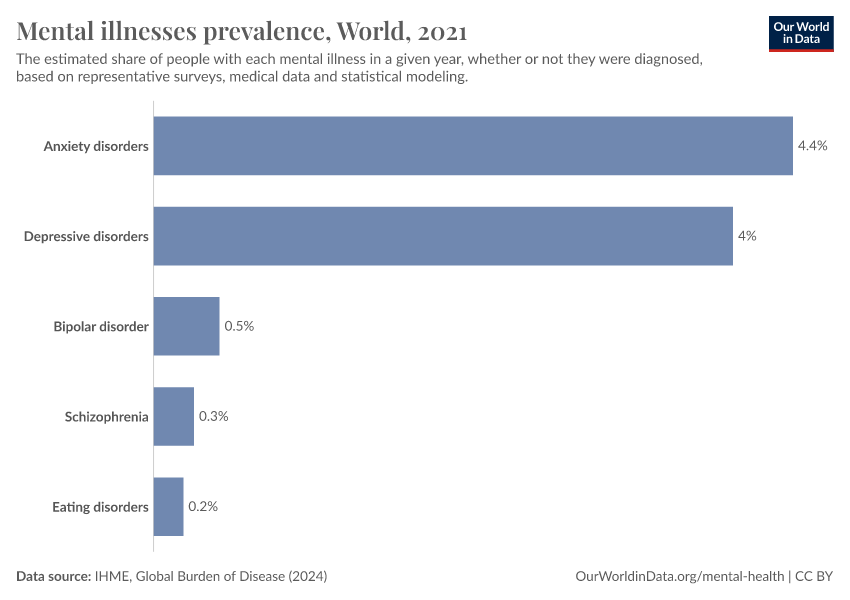
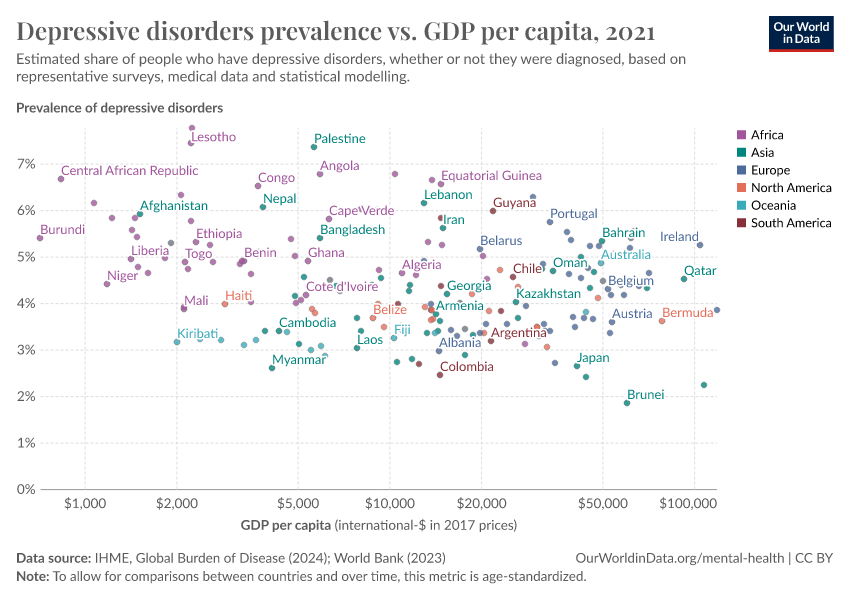
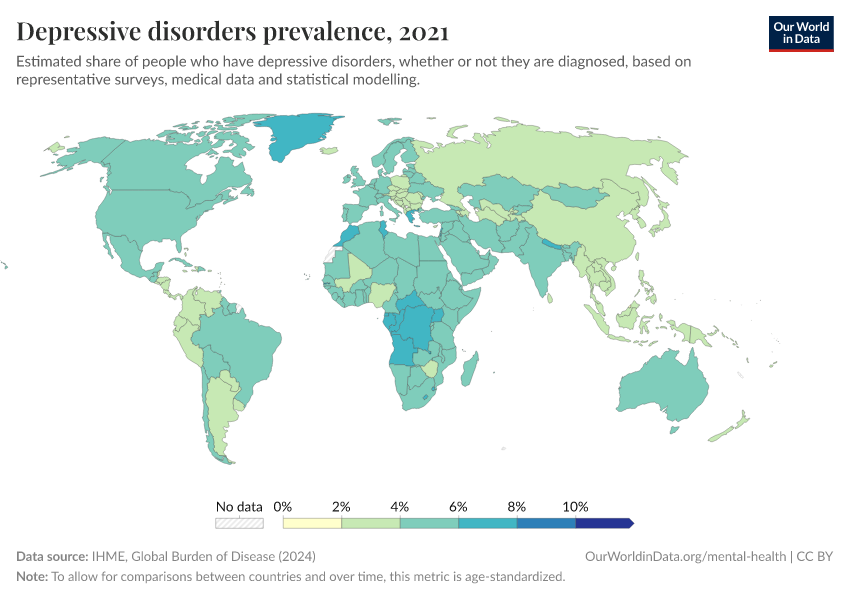
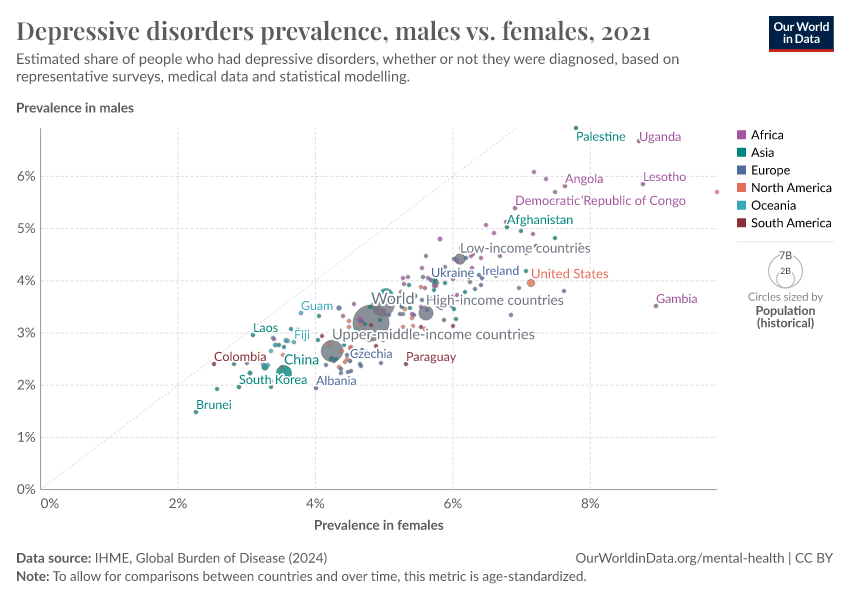
The share of population with depression ranges mostly between 2% and 6% around the world today.
In all countries the median estimate for the prevalence of depression is higher for women than for men.
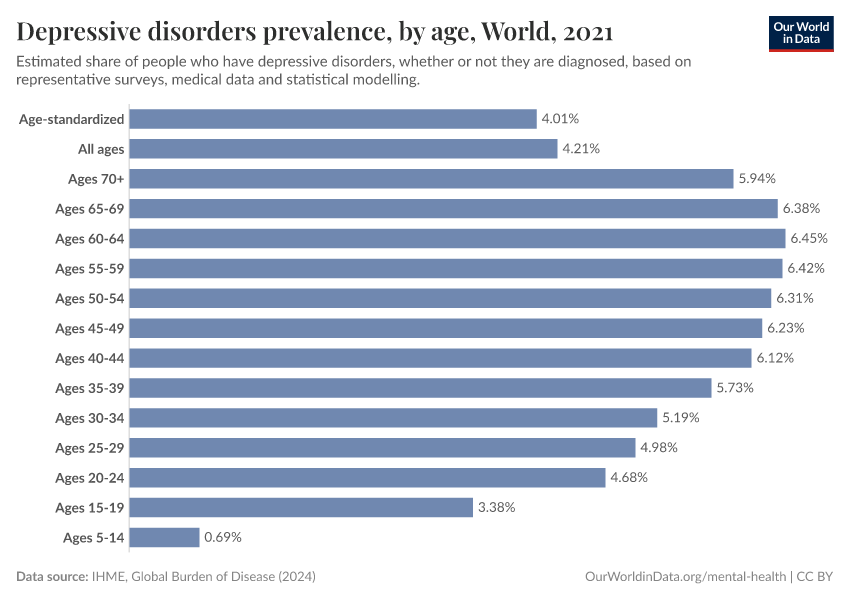
Globally the prevalence of depression is highest in older people.
Number of people with depression
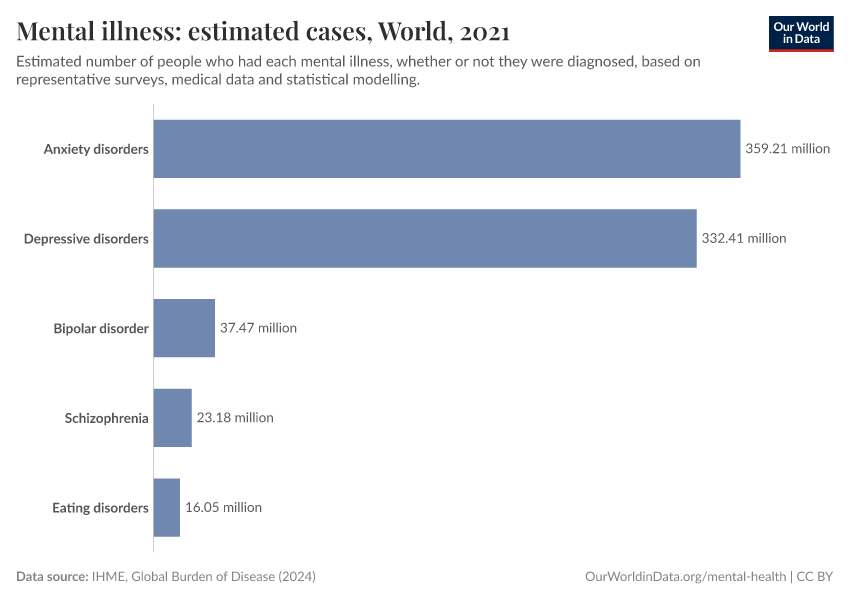
268 million people in the world are estimated to suffer from depression. A breakdown of the number of people with depression by world region can be seen here and a country by country view on a world map is here.
DALYs from depression
The chart found here shows the health burden of depression as measured in Disability Adjusted Life Years (DALYs) per 100,000. A time-series perspective on DALYs by age is here.
I.5 Anxiety disorders
Definition of anxiety disorders
Anxiety disorders arise in a number of forms including phobic, social, obsessive compulsive (OCD), post-traumatic disorder (PTSD), or generalized anxiety disorders.
The symptoms and diagnostic criteria for each subset of anxiety disorders are unique. However, collectively the WHO's International Classification of Diseases (ICD-10) note frequent symptoms of:
"(a) apprehension (worries about future misfortunes, feeling "on edge", difficulty in concentrating, etc.);
(b) motor tension (restless fidgeting, tension headaches, trembling, inability to relax);
(c) autonomic overactivity (lightheadedness, sweating, tachycardia or tachypnoea, epigastric discomfort, dizziness, dry mouth, etc.)."
The series of charts below present global data on the prevalence and disease burden which results from this range of anxiety disorders.
Prevalence of anxiety disorders
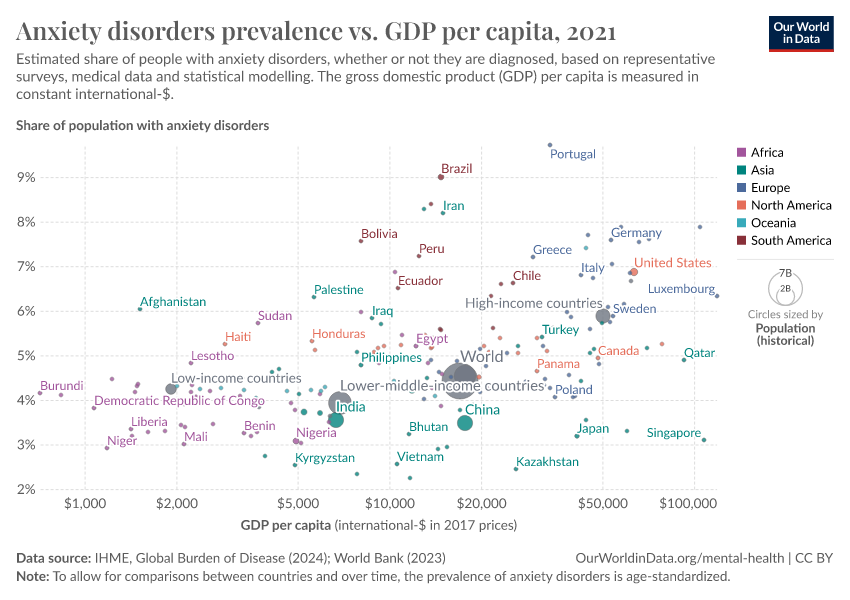
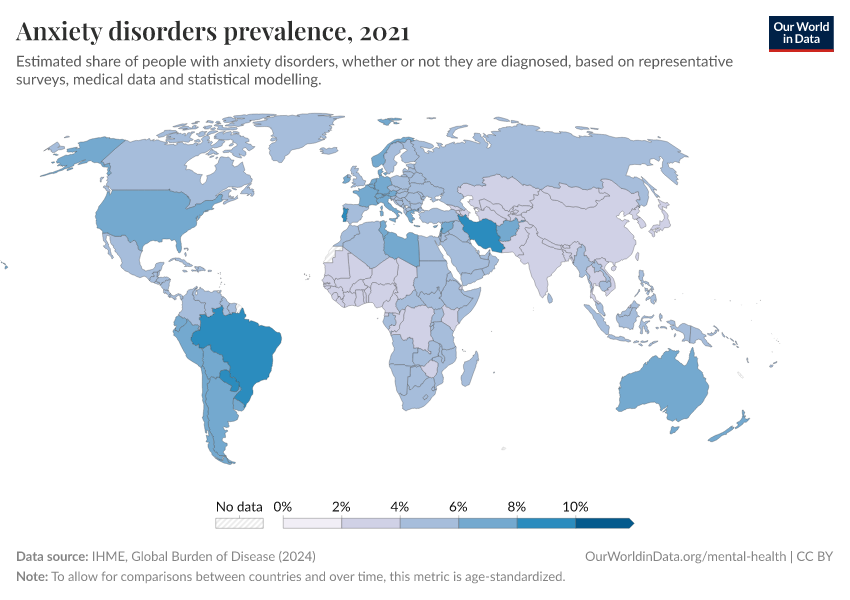
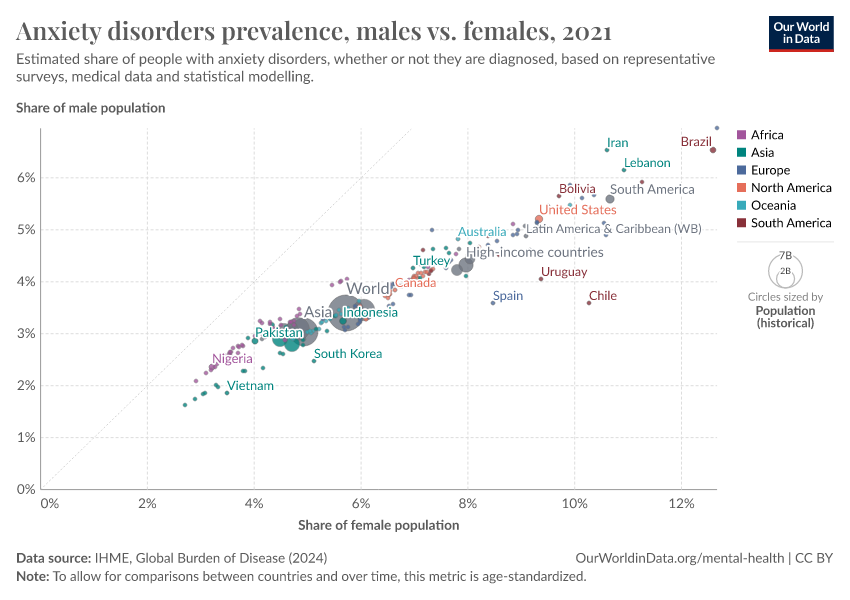
The prevalence of anxiety disorders across the world varies from 2.5 to 6.5 percent by country.
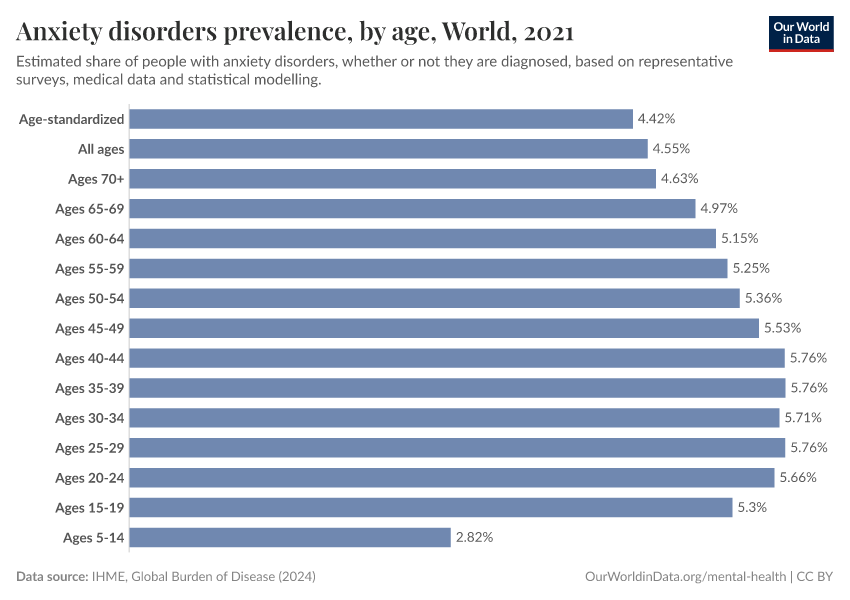
In all countries women are more likely to experience anxiety disorders than men. Prevalence trends by age can be found here.
Number of people with an anxiety disorder
Globally an estimated 275 million people experienced an anxiety disorder in 2016.
DALYs from anxiety disorders
The chart found here shows the health burden of depression as measured in Disability Adjusted Life Years (DALYs) per 100,000. A time-series perspective on DALYs by age is here.
I.6 Bipolar disorder
Definition of Bipolar disorder
Bipolar disorder (also termed bipolar affective disorder) is defined by the WHO's International Classification of Diseases (ICD-10) as follows:
"This disorder is characterized by repeated (i.e. at least two) episodes in which the patient's mood and activity levels are significantly disturbed, this disturbance consisting on some occasions of an elevation of mood and increased energy and activity (mania or hypomania), and on others of a lowering of mood and decreased energy and activity (depression). Characteristically, recovery is usually complete between episodes, and the incidence in the two sexes is more nearly equal than in other mood disorders. As patients who suffer only from repeated episodes of mania are comparatively rare, and resemble (in their family history, premorbid personality, age of onset, and long-term prognosis) those who also have at least occasional episodes of depression, such patients are classified as bipolar."
The charts below present global data on the prevalence and disease burden of bipolar disorder.
Prevalence of bipolar disorder
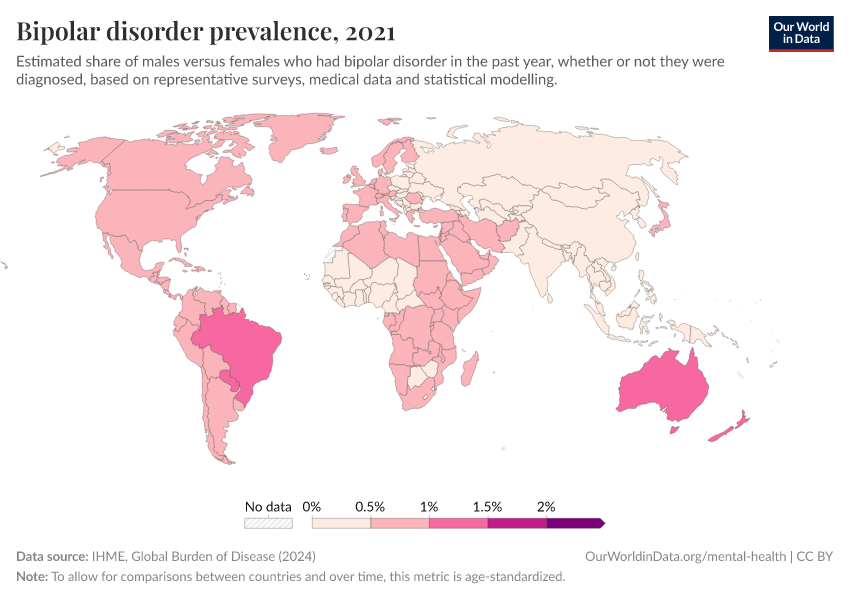
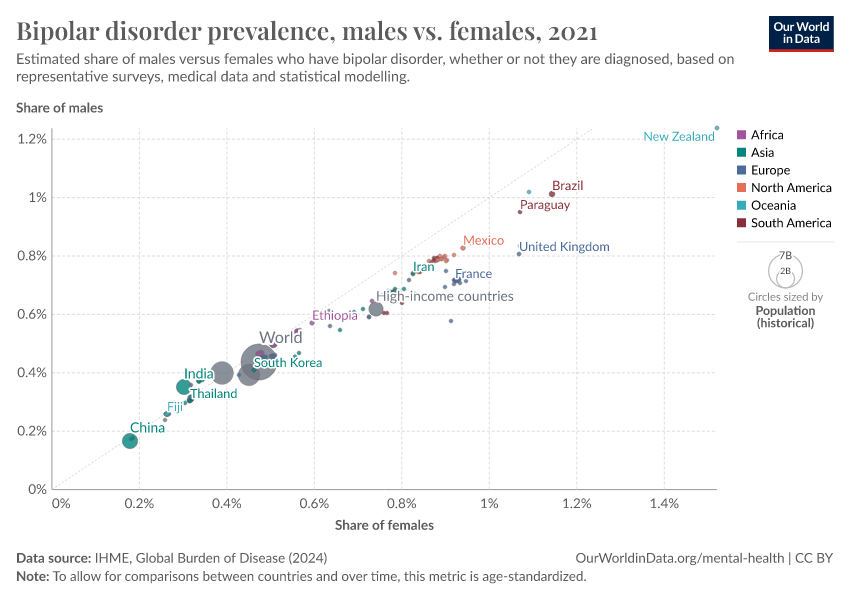
The prevalence of bipolar disorder across the world varies from 0.4 to 1.5 percent by country.
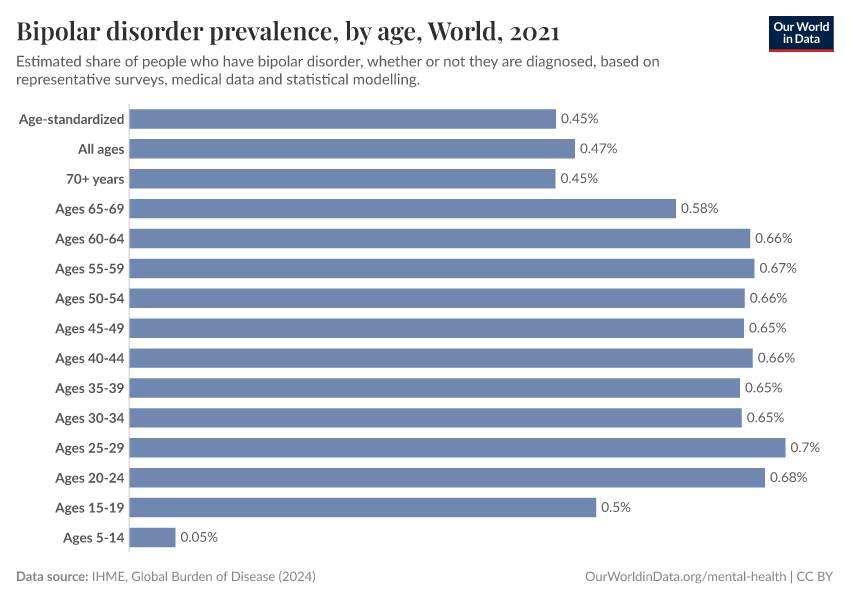
In almost all countries women are more likely to experience bipolar disorder than men. Prevalence of bipolar disorder by age can be found here.
Number of people with bipolar disorder
Globally, an estimated 40 million people in the world had bipolar disorder in 2016.
DALYs from bipolar disorder
The chart found here shows the health burden of depression as measured in Disability Adjusted Life Years (DALYs) per 100,000. A time-series perspective on DALYs by age is here.
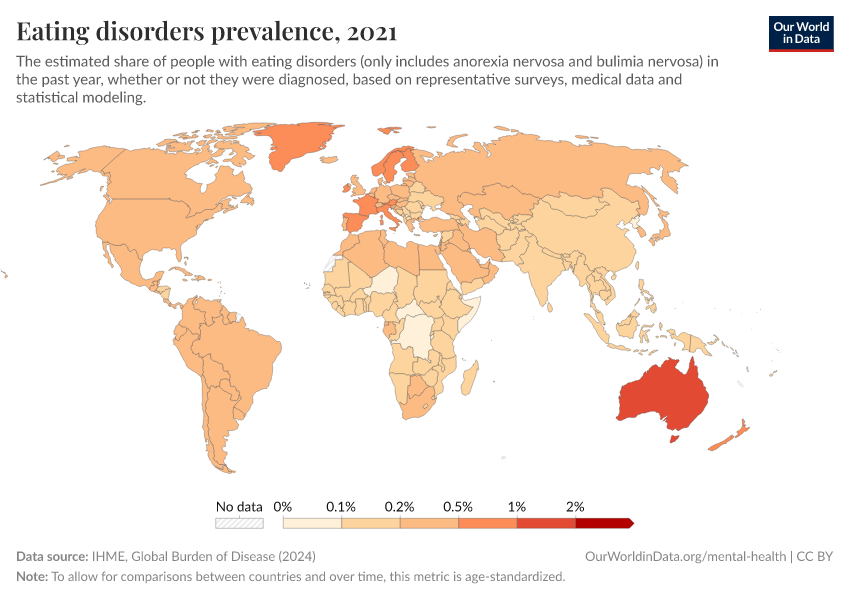
I.7 Eating disorders
Eating disorders are defined as psychiatric conditions defined by patterns of disordered eating. This therefore incorporates a spectrum of disordered eating behaviours. The underlying sources presented here present data only for the disorders of anorexia and bulimia nervosa (as defined below). It is however recognised that a large share of eating disorders fall outwith the definition of either anorexia or bulimia nervosa (these are often termed 'eating disorders not otherwise specified'; EDNOS) — some estimates report at least 60 percent of eating disorders do not meet the standard criteria.4
It is therefore expected that the data presented below significantly underestimates the true prevalence of eating disorders, since it concerns only clinically-diagnosed anorexia and bulimia nervosa.
Anorexia nervosa
"Anorexia nervosa is a disorder exemplified by deliberate weight loss, and associated with undernutrition of varying severity.
For a definite diagnosis, the ICD note that all the following are required:
(a) Body weight is maintained at least 15% below that expected (either lost or never achieved), or Quetelet's body-mass index4 is 17.5 or less. 4 Quetelet's body-mass index = weight (kg) to be used for age 16 or more - 139 - Prepubertal patients may show failure to make the expected weight gain during the period of growth;
(b) The weight loss is self-induced by avoidance of "fattening foods". One or more of the following may also be present: self-induced vomiting; self-induced purging; excessive exercise; use of appetite suppressants and/or diuretics;
(c) There is body-image distortion in the form of a specific psychopathology whereby a dread of fatness persists as an intrusive, overvalued idea and the patient imposes a low weight threshold on himself or herself;
(d) A widespread endocrine disorder involving the hypothalamic - pituitary - gonadal axis is manifest in women as amenorrhoea and in men as a loss of sexual interest and potency. (An apparent exception is the persistence of vaginal bleeds in anorexic women who are receiving replacement hormonal therapy, most commonly taken as a contraceptive pill.) There may also be elevated levels of growth hormone, raised levels of cortisol, changes in the peripheral metabolism of the thyroid hormone, and abnormalities of insulin secretion;
(e) If onset is prepubertal, the sequence of pubertal events is delayed or even arrested (growth ceases; in girls the breasts do not develop and there is a primary amenorrhoea; in boys the genitals remain juvenile). With recovery, puberty is often completed normally, but the menarche is late."
Bulimia nervosa
"Bulimia nervosa is an illness defined by repeated behaviours of overeating, preoccupation with control of body weight, and the adoption of extreme measures to mitigate the impacts of overeating.
For a definite diagnosis, the ICD note that all the following are required:
(a) There is a persistent preoccupation with eating, and an irresistible craving for food; the patient succumbs to episodes of overeating in which large amounts of food are consumed in short periods of time.
(b) The patient attempts to counteract the "fattening" effects of food by one or more of the following: self-induced vomiting; purgative abuse, alternating periods of starvation; use of drugs such as appetite suppressants, thyroid preparations or diuretics. When bulimia occurs in diabetic patients they may choose to neglect their insulin treatment.
(c) The psychopathology consists of a morbid dread of fatness and the patient sets herself or himself a sharply defined weight threshold, well below the premorbid weight that constitutes the optimum or healthy weight in the opinion of the physician. There is often, but not always, a history of an earlier episode of anorexia nervosa, the interval between the two disorders ranging from a few months to several years. This earlier episode may have been fully expressed, or may have assumed a minor cryptic form with a moderate loss of weight and/or a transient phase of amenorrhoea."
Prevalence of eating disorders
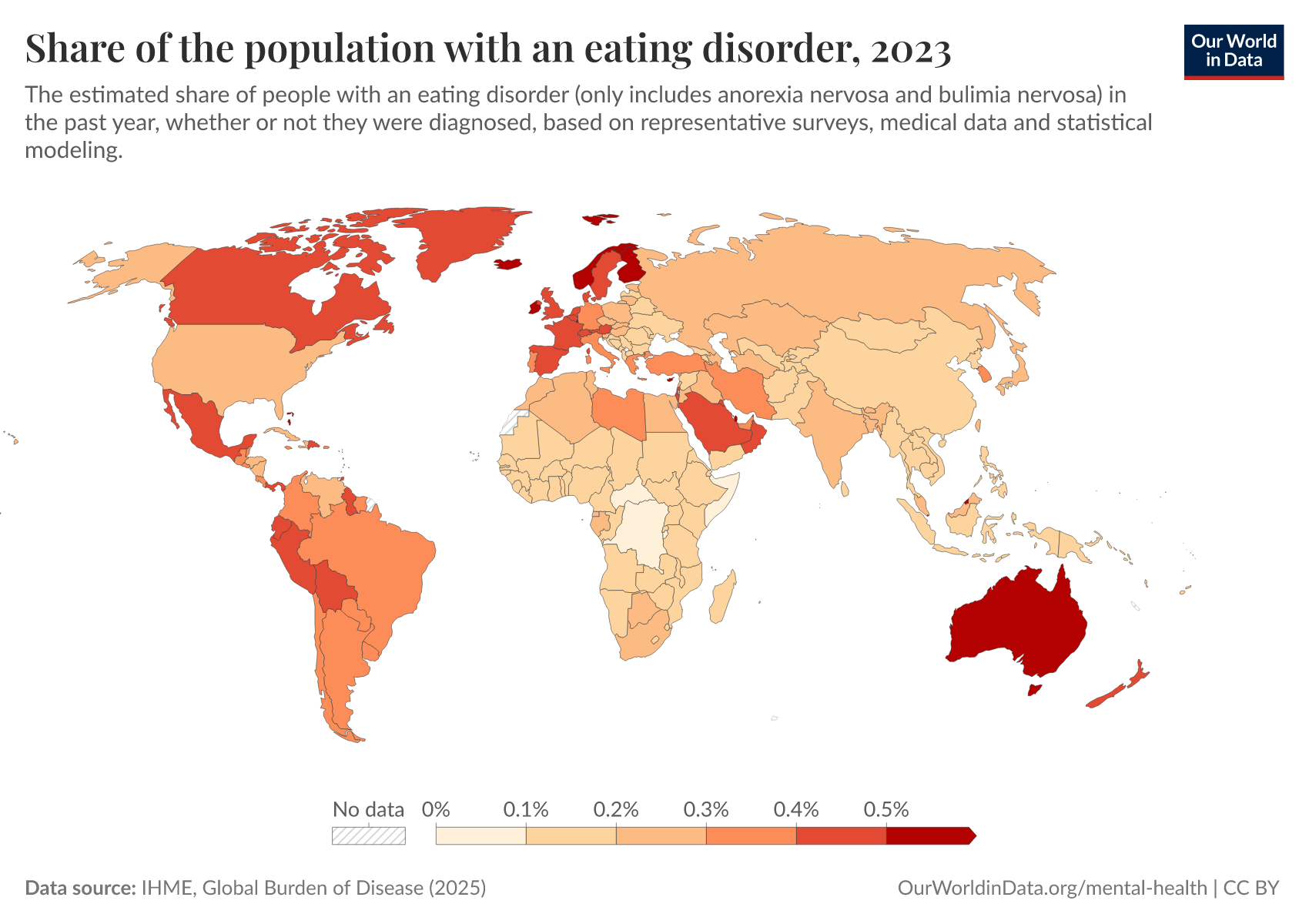
The prevalence of eating disorders (anorexia and bulimia nervosa) ranges from 0.05 to 0.55 percent by country.
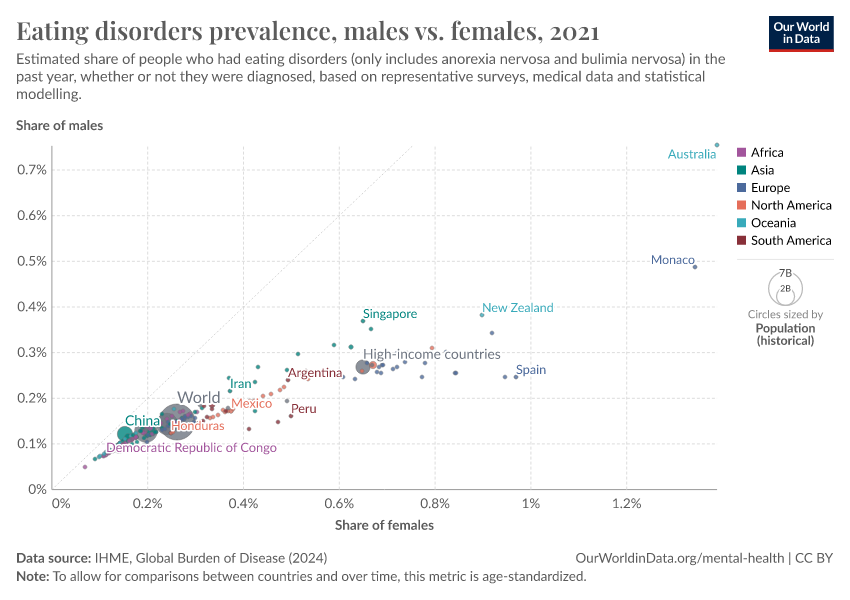
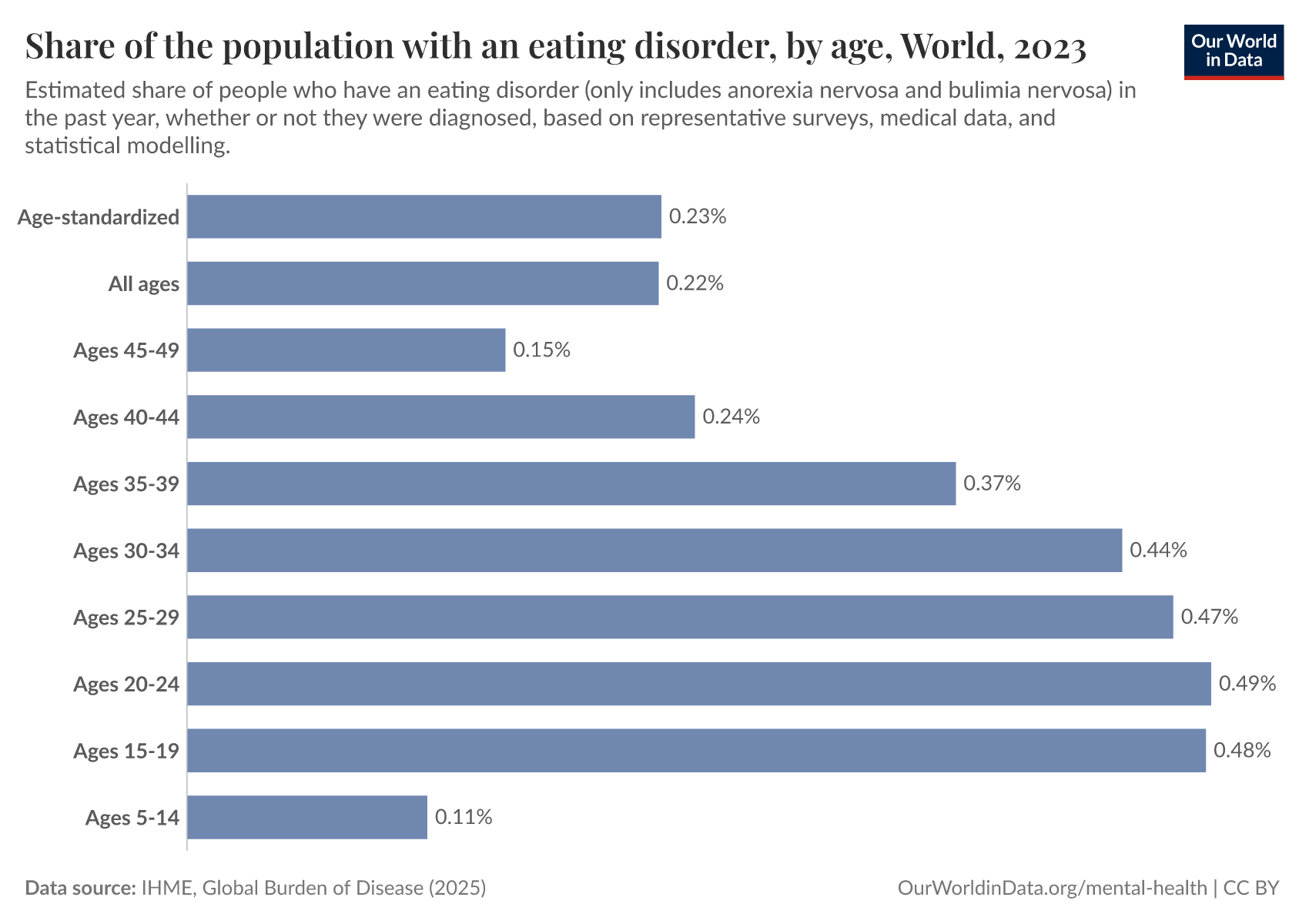
In every country women are more likely to experience an eating disorder than men. Eating disorders tend to be more common in young adults aged between 15 and 34 years old. Trends in prevalence by age can be found here.
Number of people with eating disorders
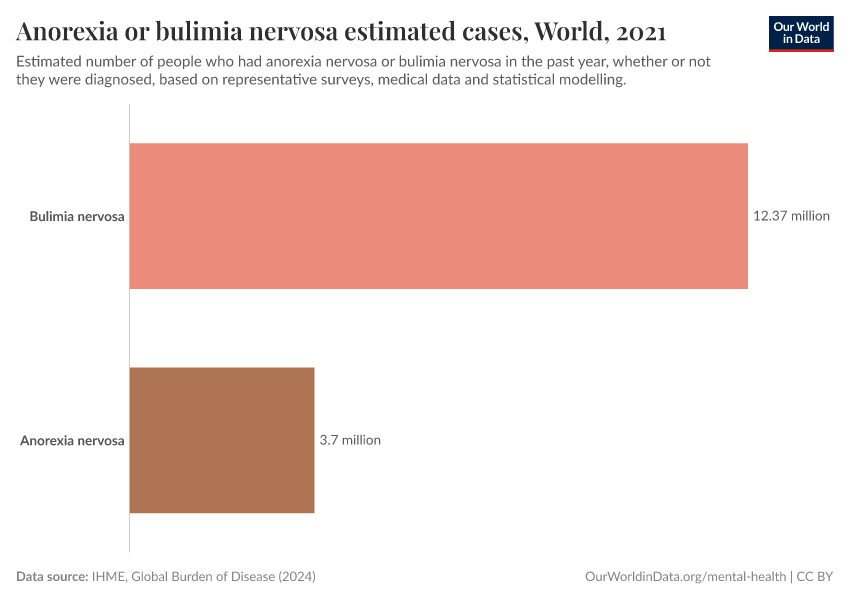
Globally an estimated 10.5 million had clinical anorexia and bulimia nervosa in 2016. Bulimia was more common: around 75 percent had bulimia nervosa.
Deaths from eating disorders
Direct deaths can result from eating disorders through malnutrition and related health complications. The chart below shows the estimated number of direct deaths from anorexia and bulimia nervosa. Evidence suggests that having an eating disorder can increase the relative risk of suicide; suicide deaths in this case are not included here.
Trends in death rates from eating disorders can be found here.
DALYs from eating disorders
The chart found here shows the health burden of eating disorders as measured in Disability Adjusted Life Years (DALYs) per 100,000. A time-series perspective on DALYs by age is here.
I.8 Schizophrenia
Schizophrenia is defined by the IHME based on the definition within the WHO's International Classification of Diseases (ICD-10) as:
"The normal requirement for a diagnosis of schizophrenia is that a minimum of one very clear symptom (and usually two or more if less clear-cut) belonging to any one of the groups listed as (a) to (d) below, or symptoms from at least two of the groups referred to as (e) to (h), should have been clearly present for most of the time during a period of 1 month or more:
- (a) thought echo, thought insertion or withdrawal, and thought broadcasting;
- (b) delusions of control, influence, or passivity, clearly referred to body or limb movements or specific thoughts, actions, or sensations; delusional perception;
- (c) hallucinatory voices giving a running commentary on the patient's behaviour, or discussing the patient among themselves, or other types of hallucinatory voices coming from some part of the body;
- (d) persistent delusions of other kinds that are culturally inappropriate and completely impossible, such as religious or political identity, or superhuman powers and - 79 - abilities (e.g. being able to control the weather, or being in communication with aliens from another world);
- (e) persistent hallucinations in any modality, when accompanied either by fleeting or half-formed delusions without clear affective content, or by persistent over-valued ideas, or when occurring every day for weeks or months on end;
- (f) breaks or interpolations in the train of thought, resulting in incoherence or irrelevant speech, or neologisms;
- (g) catatonic behaviour, such as excitement, posturing, or waxy flexibility, negativism, mutism, and stupor;
- (h) "negative" symptoms such as marked apathy, paucity of speech, and blunting or incongruity of emotional responses, usually resulting in social withdrawal and lowering of social performance; it must be clear that these are not due to depression or to neuroleptic medication;
- (i) a significant and consistent change in the overall quality of some aspects of personal behaviour, manifest as loss of interest, aimlessness, idleness, a self-absorbed attitude, and social withdrawal."
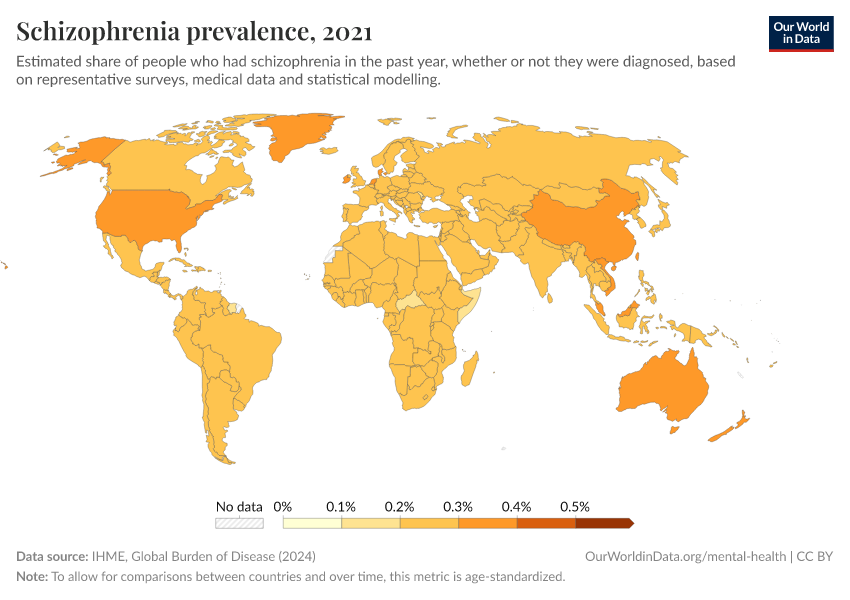
The following charts present global-level data on the prevalence of schizophrenia.
Prevalence of schizophrenia
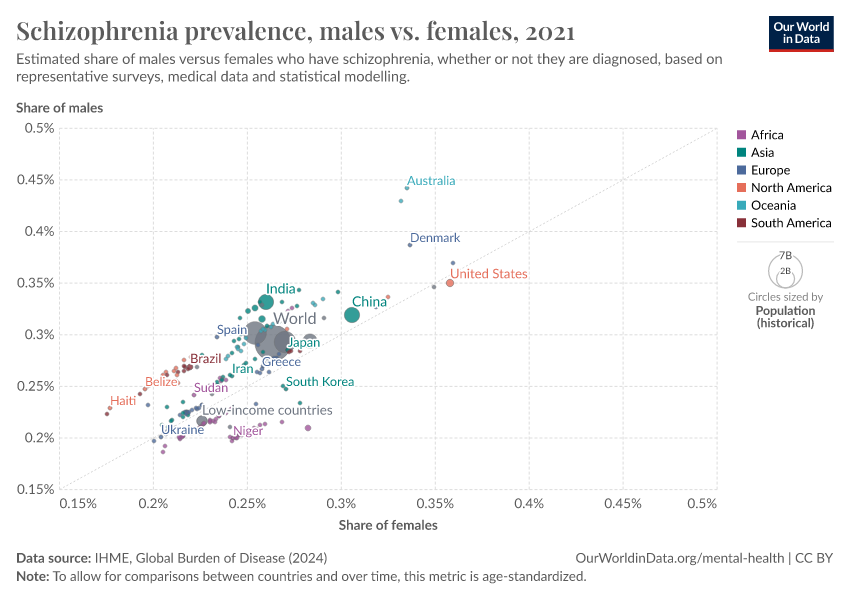
The prevalence of schizophrenia typically ranges from 0.2 to 0.45 percent across countries.
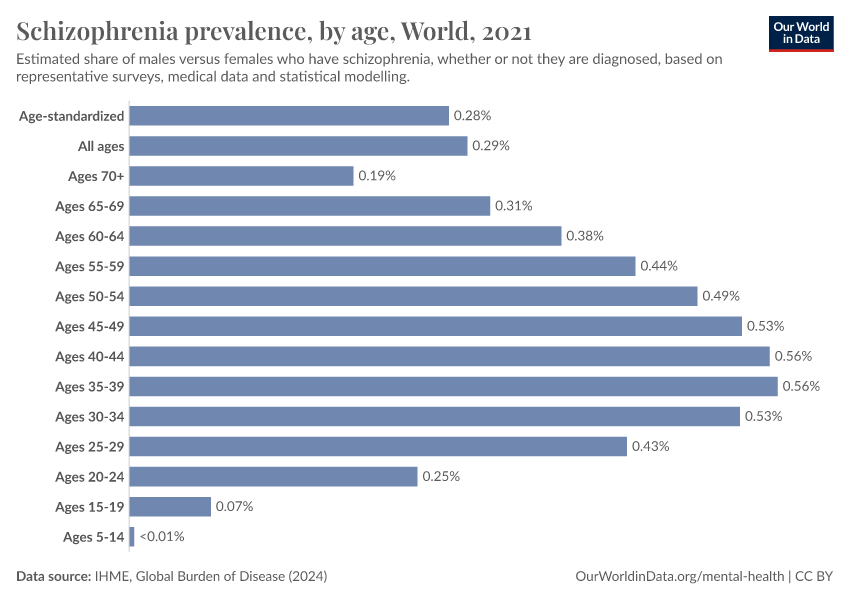
In many countries (but not all) the prevalence of schizophrenia is slightly higher in men than women. Prevalence by age can be found here.
Number of people with schizophrenia
It's estimated that around 21 million people in world had schizophrenia in 2016; the number of men and women with schizophrenia was approximately the same (around 10.5 million each).
DALYs from schizophrenia
The chart found here shows the health burden of schizophrenia as measured in Disability Adjusted Life Years (DALYs) per 100,000. A time-series perspective on DALYs by age is here.
I.9 Autistic spectrum disorders
Autistic disorders lie on a spectrum, which differ in terms of severity and characteristic behaviours. The term 'autistic spectrum disorder' includes those with autism (both childhood and atypical), and Asperger Syndrome or other autistic spectrum disorders. 'Autism' is defined by characteristics of abnormal functioning in all three areas of social interaction, communication, and restricted, repetitive behaviour. Asperger syndrome is classified as part of the spectrum of autistic disorders but differs from autism primarily in that there is no general delay or retardation in language or in cognitive development.
The charts below present global level data on the prevalence of autistic disorders, as well as autism and Asperger syndrome specifically.
Prevalence of autistic spectrum disorders
The prevalence of autistic spectrum disorders across most countries is roughly 1 percent of the total population; this ranges from 0.8 to 1.1 percent across countries.
Males are approximately 4-5 times as likely to have autistic spectrum disorder versus females.
Number of people with autistic spectrum disorder
Globally, around 62 million people were estimated to have autistic spectrum disorder in 2016. Just under 50 million of these cases were in males. Of the 62 million with autistic spectrum disorder, around 18 million had Autism, and 44 million had Asperger syndrome and other spectrum disorders. These breakdowns are shown in the charts below.
DALYs from autistic spectrum disorders
The chart found here shows the health burden of autistic spectrum disorders as measured in Disability Adjusted Life Years (DALYs) per 100,000. A breakdown of DALYs from autism and Asperger syndrome can be found here.
Autism
Autism, which is a sub-category of autistic spectrum disorders, is defined by the ICD as:
Childhood autism
"A pervasive developmental disorder defined by the presence of abnormal and/or impaired development that is manifest before the age of 3 years, and by the characteristic type of abnormal functioning in all three areas of social interaction, communication, and restricted, repetitive behaviour."
"Usually there is no prior period of unequivocally normal development but, if there is, abnormalities become apparent before the age of 3 years. There are always qualitative impairments in reciprocal social interaction. These take the form of an inadequate appreciation of socio-emotional cues, as shown by a lack of responses to other people's emotions and/or a lack of modulation of behaviour according to social context; poor use of social signals and a weak integration of social, emotional, and communicative behaviours; and, especially, a lack of socio-emotional reciprocity.
"The condition is also characterized by restricted, repetitive, and stereotyped patterns of behaviour, interests, and activities. These take the form of a tendency to impose rigidity and routine on a wide range of aspects of day-to day functioning; this usually applies to novel activities as well as to familiar habits and play patterns."
Atypical autism
'Atypical autism' differs from childhood autism either based on the age of onset, or the number of diagnostic criteria which are fulfilled. Those with atypical autism develop the condition after the age of 3 and/or they do not demonstrate behaviours in one or two of the three areas which typically diagnose autism (i.e. reciprocal social interactions, communication, and restrictive, stereotyped, repetitive behaviour).
Prevalence of autism
The prevalence of autism typically ranges from 0.2 to 0.5 percent across countries.
Like the full spectrum of autistic spectrum disorders, males are much more likely to have autism than females. Males are around 2 to 3 times more likely to have autism than females.
Number of people with autism
Globally, an estimated 18 million people had autism in 2016; 13 million males and 5 million females.
Asperger Syndrome and other autistic spectrum disorders
Asperger Syndrome is classified as part of the spectrum of autistic disorders, but is differentiated from childhood or atypical autism. The ICD provide the following definition and diagnostic criteria for Asperger Syndrome:
"A disorder of uncertain nosological validity, characterized by the same kind of qualitative abnormalities of reciprocal social interaction that typify autism, together with a restricted, stereotyped, repetitive repertoire of interests and activities. The disorder differs from autism primarily in that there is no general delay or retardation in language or in cognitive development."
"Diagnosis is based on the combination of a lack of any clinically significant general delay in language or cognitive development plus, as with autism, the presence of qualitative deficiencies in reciprocal social interaction and restricted, repetitive, stereotyped patterns of behaviour, interests, and activities. There may or may not be problems in communication similar to those associated with autism, but significant language retardation would rule out the diagnosis."
Prevalence of Asperger Syndrome and other autistic spectrum disorders
The prevalence of Asperger Syndrome and other autistic spectrum disorders (not including autism) typically ranges from 0.5 to 0.8 percent across countries. This is higher than the typical prevalence of Autism.
There is a very strong gender difference in the prevalence of Asperger Syndrome and other autistic spectrum disorders; this gender gap is wider than for Autism. Across all countries, males are between 4 to 6 times more likely to have Asperger Syndrome and other autistic spectrum disorders than females.
Number of people with Asperger Syndrome and other autistic spectrum disorders
Globally, an estimated 44 million had Asperger Syndrome and other autistic spectrum disorders (not including Autism) in 2016. 4.5-times as many males had Asperger Syndrome than (36 million) versus females (8 million).
I.10 Attention deficit/hyperactivity disorders (ADHD)
Attention deficit/hyperactivity disorder (ADHD) is termed 'hyperkinetic disorders' by the ICD. It uses the following definition and diagnostic criteria:
"this group of disorders is characterized by: early onset; a combination of overactive, poorly modulated behaviour with marked inattention and lack of persistent task involvement; and pervasiveness over situations and persistence over time of these behavioural characteristics.
"Hyperkinetic disorders always arise early in development (usually in the first 5 years of life). Their chief characteristics are lack of persistence in activities that require cognitive involvement, and a tendency to move from one activity to another without completing any one, together with disorganized, ill-regulated, and excessive activity. These problems usually persist through school years and even into adult life, but many affected individuals show a gradual improvement in activity and attention."
Prevalence of ADHD
The prevalence of attention deficit/hyperactivity disorder (ADHD) ranges from 0.5 to 2 percent of the population across countries.
Males are typically 2 to 3 times more likely to have ADHD versus females. This is true across all countries.
Number of people with ADHD
Globally, it's estimated that around 63 million had ADHD in 2016. 70 percent of ADHD cases were in males (44 million) versus females (19 million).
I.11 Developmental intellectual disability
The Institute of Health Metrics (IHME) and the WHO International Classification of Diseases (ICD) define a broad category of 'idiopathic developmental intellectual disability'. This category is broad and incorporates a number id disorders which are defined by delayed or impaired speech, language, motor condition, and visuo-spatial skills.
The ICD categorise this group of disorders as having the following common traits:
"(a) an onset that is invariably during infancy or childhood;
(b) an impairment or delay in the development of functions that are strongly related to biological maturation of the central nervous system; and
(c) a steady course that does not involve the remissions and relapses that tend to be characteristic of many mental disorders."
"In most cases, the functions affected include language, visuo-spatial skills and/or motor coordination. It is characteristic for the impairments to lessen progressively as children grow older (although milder deficits often remain in adult life)."
Prevalence of intellectual disability disorders
The prevalence of intellectual disability disorders typically ranges from 0.4 to 3 percent of the population across countries.
In all countries the prevalence of intellectual disability disorders are higher in males than in females. The gender gap appears to be smallest at low prevalence levels (where males and females are almost equally as likely), with a gradual widening of the gender gap as the prevalence increases.
Number of people with intellectual disability disorders
Globally, an estimated 115 million had an intellectual disability disorder in 2016. 56 percent of this total were male (65 million) and 44 percent female (50 million).
II. Correlates, Determinants & Consequences
II.1 Risk factors for mental health
The determinants, onset and severity of mental health disorders are complex - they can rarely be attributed to a single factor. The World Health Organization synthesize the potential contributors to mental health and wellbeing into three categories:5
- individual attributes and behaviours: these can be particular genetic factors or personality traits;
- social and economic circumstances;
- environmental factors.
In the table below we see the WHO's breakdown of potential adverse and protective factors for mental health within these three categories. These factors often interact, compound or negate one another and should therefore not be considered as individual traits or exposures. For example, particular individual traits may make a given person more vulnerable to mental health disorders with the onset of a particular economic or social scenario — the instance of one does not necessarily result in a mental health disorder, but combined there is a significantly higher vulnerability.
| Level | Adverse Factors | Protective Factors |
|---|---|---|
| Individual attributes | Low self-esteem | Self-esteem, confidence |
| Cognitive/emotional immaturity | Ability to solve problems & manage stress or adversity | |
| Difficulties in communicating | Communication skills | |
| Medical illness, substance use | Physical health, fitness | |
| Social circumstances | Loneliness, bereavement | Social support of family & friends |
| Neglect, family conflict | Good parenting/family interaction | |
| Exposure to violence/abuse | Physical security & safety | |
| Low income & poverty | Economic security | |
| Difficulties or failure at school | Scholastic achievement | |
| Work stress, unemployment | Satisfaction & success at work | |
| Environmental factors | Poor access to basic services | Equality of access to basic services |
| Injustice & discrimination | Social justice, tolerance, integration | |
| Social & gender inequalities | Social & gender equality | |
| Exposure to war or disaster | Physical security & safety |
Risk factors through the life-course
The risk factors and influencers on mental health vary significantly for an individual as they move through the life-course. The following are acknowledged risk factors for a given stage of life.6
– Pre-conception and pre-natal period
A given individual's mental health and wellbeing can be influenced by factors present prior to conception or birth. Pregnancies which are unwanted or in adolescence can increase the likelihood of detrimental behaviours of the mother during pregnancy, and the environmental or family conditions of childhood.7 During pregnancy, detrimental behaviours including tobacco, alcohol and drug use can increase the likelihood of later mental health disorders for children; malnutrition, low-birth weight and micronutrient deficiency (for example, iodine deficiency) can also influence later mental health vulnerabilities.8,9,10
– Infancy and early childhood
There is a large base of evidence which shows that emotional attachment in early childhood has a considerable impact on later vulnerability to mental health and wellbeing.11,12 As a result, particular risk factors include separation from the primary caregiver, in some cases post-natal depression in mothers (which can result in sub-optimal attachment), and parents for whom communication and social interaction is challenging. Child maltreatment and neglect has been found to have a significant impact on vulnerabilities to mental wellbeing.13,14 Malnutrition, poor access to basic services and disease and parasites are also important contributors.
– Childhood
Childhood conditions form a critical component of health and wellbeing later in life. Negative experiences, either at home or outside of the home (for example, bullying in school) can have lifelong impacts on the development of core cognitive and emotional skills. Poor socioeconomic conditions also have a significant effect on vulnerability to mental health disorders; in a study in Sweden, the authors found that children raised in families of poor socioeconomic backgrounds had an increased risk of psychosis.15 Poor economic resources, shown through poor housing conditions for example, can be seen by children as shameful or degrading and affect aspects of childhood learning, communication and interaction with peers.
Children with a parent who has a mental illness or substance use disorder have a higher risk of psychiatric problems themselves.16,17,18 This effect between generations can occur as a result of genetic, biological, psychological and social risk factors.
– Adolescence
Adolescence is typically the stage of life where mental health disorders tend to become more apparent. The risk factors and contributors to wellbeing in childhood apply equally to those in adolescence. In addition, several other contributing factors appear. It is in the years of adolescence that the use of substances including alcohol and drugs first appear.
Substance use is particularly hazardous and harmful for adolescents because individuals are still developing both mentally and physically. Peer pressure, and media influences also become more prominent over these years. Exposure to substance use is not only an important risk factor for other mental health disorders, but also linked to poorer educational outcomes, more risky sexual behaviour and increased exposure to violence and conflict.
– Adulthood
Experiences and emotional capabilities developed through childhood and adolescence are important factors in the effect that particular events and scenarios in adulthood have on mental health outcomes.
The WHO highlight that critical to wellbeing in adulthood is the allocation and balance between work and leisure time. Exposure to high stress and anxiety is strongly influenced by the share of time working, caring for others, or time spent in an insecure economic environment. Individuals with poor socioeconomic security, and in particular unemployment, are also at higher risk to mental health disorders.
These factors, balanced with the amount of time spent on 'consumption' activities, including leisure time and supportive family and friends, often determine the propensity for poor mental health and wellbeing. Community structures can have a significant positive impact on these outcomes — individuals who have poor access to such communities, either through social exclusion, neighbourhood violence/crime, or lack of respite care have a higher risk of mental health disorders.
Physical health also has an important impact on mental wellbeing; an individual's 'physical capital' can influence their sense of esteem and social inclusion. Individuals with chronic illness or disability are at higher risk of poor mental health; this is particularly true for conditions with high rates of stigmatisation, such as HIV/AIDS.
– Older age
Individuals of older age are of notably high risk of poorer mental health and wellbeing. This typically results from notable changes in life conditions (such as a cease in employment which affects both the feeling of contribution and economic freedom), higher social exclusion, and loneliness. This is particularly true when an older individual begins to lose close family and friends. Bereavement in general is an important predictor of mental health disorders such as depression.
A decline in physical health can have major impacts on life capabilities by affecting an individual's mobility and freedom. Older individuals are also at higher risk of abuse or neglect from carers and in some cases, family members.
II.2 Link between mental health and suicide
The link between mental health and substance use disorders and suicide is well-documented.19 It is however true that not all suicides - or suicide attempts - are attributed to underlying mental health or substance use disorders; as shown in the chart below, there is not a direct relationship between mental health prevalence and suicide rates.20
We cover suicide statistics more broadly in our full entry on Suicide, however here we attempt to distil the key findings on the links between mental health and substance use and suicide. Although mental health and substance use disorders is within the top-five causes of disease burden globally (as measured by Disability-Adjusted Life Years; DALYs), accounting for approximately 7 percent of the burden, several authors have highlighted that such figures — since they do not include suicide DALYs — underestimate the true cost of mental health disorders.21 Providing a more accurate estimate of total mental health burden therefore requires some understanding of the connection between these disorders and suicide.
Meta-analyses of psychological autopsy studies of suicide across high-income countries suggest that up to 90 percent of suicides occur as a result of an underlying mental health or substance use disorder.22, 23, 24 Whilst available data and studies are more scarce across lower-to-middle income countries, evidence across countries including China, Taiwan and India suggest that this proportion is significantly lower elsewhere.25, 26, 27, 28 These studies suggest a large number of suicides resultant from the ‘dysphoric affect’ and ‘impulsivity’ (which are not defined as a mental and substance use disorder). In such cases, understanding the nature of self-harm methods between countries is important; in these countries a high percentage of self-harming behaviours are carried out through more lethal methods such as poisoning (often through pesticides) and self-immolation. This means that in a high number of cases self-harming behaviours can prove fatal, even if there was not a clear intent to die.
A study by Ferrari et al. (2015) attempted to determine the share disease burden from suicide which could be attributed to mental health or substance use disorders.29 Based on review across a number of meta-analysis studies the authors estimated that 68 percent of suicides across China, Taiwan and India were attributed to mental health and substance use disorders; across other countries this share was approximately 85 percent. In their estimates of total attributable disease burden, the authors concluded that mental health and substance use disorders were responsible for 62 percent of total DALYs from suicide.
Mental health as a risk factor for suicide
Although the total prevalence of mental health and substance use disorders does not show a direct relationship to suicide rates (as shown in the chart above), there are notable links between specific types of mental health disorders and suicide. In their meta-study of the mental health-suicide relationship, Ferrari et al. (2015) assess the pooled relative risk of suicide across a range of mental health and substance use disorders.30 This represents the increased risk of suicide for those with a particular mental health or substance use disorder.
The figures below represent estimates of the increased risk of suicide for an individual with one of the following disorders. An individual with depression, for example, is 20 times more likely to die from suicide than someone without; some with anxiety disorder around 3 times; schizophrenia around 13 times; bipolar disorder 6 times; and anorexia 8 times as likely.
| Disorder | Pooled relative risk (95% UI) |
|---|---|
| Major depressive disorder | 19.9 (9.5-41.7) |
| Anxiety disorder | 2.7 (1.7-4.3) |
| Schizophrenia | 12.6 (11.0-14.5) |
| Bipolar disorder | 5.7 (2.6-12.4) |
| Anorexia nervosa | 7.6 (2.2-25.6) |
| Alcohol dependence | 9.8 (9.0-10.7) |
| Opioid dependence | 6.9 (4.5-10.5) |
| Psychostimultant dependence | 8.2 (3.9-16.9) |
II.3 Life satisfaction and mental health
Is the prevalence of mental health disorders reflected in the self-reported life satisfaction or happiness of a given country? Intuitively we may assume that countries with a higher average self-reported life satisfaction would have lower prevalence of mental health disorders. In the chart below we see the relationship between the prevalence of depressive disorders and life satisfaction (measured on a scale of 0 to 10, where 10 is highest).
Overall we see very little correlation between these two metrics. There is little indication that the more satisfied or 'happy' a given country is, the lower the prevalence of depressive disorders. There are a number of reasons why we would expect there to be little relationship. The first is that, as explained in our entry on Happiness and Life Satisfaction, the Cantril ladder measures the aggregate or average life satisfaction of a given country. Since the typical prevalence of depression across countries is approximately 4-5 percent, we may not expect the reported life satisfaction of these individuals to impact significantly on the overall score of a given country.
Secondly, there is the issue of how accurately self-reported life satisfaction values reflect the actual happiness or life-satisfaction of a given person. It is not improbable that people may lie or exaggerate how satisfied they are with their life. Overall, as we describe in our separate entry, studies have found good correlation between self-reported life satisfaction and particular signals of happiness (such as smiling frequency, smiling with the eyes, sleep quality, nuances in word choice and language, sociability etc.) as well as activity in parts of the brain associated with pleasure and happiness. Nonetheless, because on average, self-reported and signs of happiness/satisfaction correlate well does not necessitate that this is the cases in more specific demographics, such as those with depression or other mental health disorders.
III. Data Quality, Definitions and Measurement
III.1 How is prevalence defined and measured?
The widespread issue of underreporting in mental health reporting means accurate and representative data on the prevalence of disorders is difficult to define. If reliant on mental health diagnoses alone, this underestimation would be severe. Furthermore, prevalence figures would be likely to reflect healthcare spending (which allows for more focus on mental health disorders) rather than giving a representative perspective on differences between countries; high-income countries would likely show significantly higher prevalence as a result of more diagnoses.
The data presented in this entry by the Institute of Health Metrics & Evaluation (IHME) is therefore based on a combination of sources, including medical and national records, epidemiological data, in addition to survey data. Where raw data for a particular country is scarce, epidemiological data and meta-regression models must be used based on available data from neighbouring countries. Data quality issues are described below.
The data presented here therefore offers an estimate (rather than official diagnosis) of mental health prevalence based on medical, epidemiological data, surveys and meta-regression modelling.
III.2 Data availability on mental health
The majority of data presented in this entry is based on estimates from the IHME's Global Burden of Disease (GBD). This is currently one of the only sources which produces global level estimates across most countries on the prevalence and disease burden of mental health and substance use disorders.
Nonetheless, the GBD acknowledges the clear data gaps which exist on mental health prevalence across the world. Despite being the 5th largest disease burden at a global level (and with within the top three across many countries), detailed data is often lacking. This is particularly true of lower-income countries. The Global Burden of Disease note that the range of epidemiological studies they draw upon for global and national estimates are unequally distributed across disorders, age groups, countries and epidemiological parameters.31 Utilising these studies to provide full coverage of these disorders is challenging.
To overcome these methodological challenges the authors note:
To deal with this issue and be able to include data derived using various study methodologies and designs, GBD 2013 makes use of DisMod-MR, version 2.0, a Bayesian meta-regression tool. The software makes it possible to pool all of the epidemiological data available for a given disorder into a weighted average, while simultaneously adjusting for known sources of variability in estimates reported across studies. If raw data are not available for a given country, the software produces an imputed estimate for each epidemiological parameter based on data available from surrounding countries. This allowed GBD to include estimates for 188 countries.
III.3 Comparison of IHME estimates to other sources
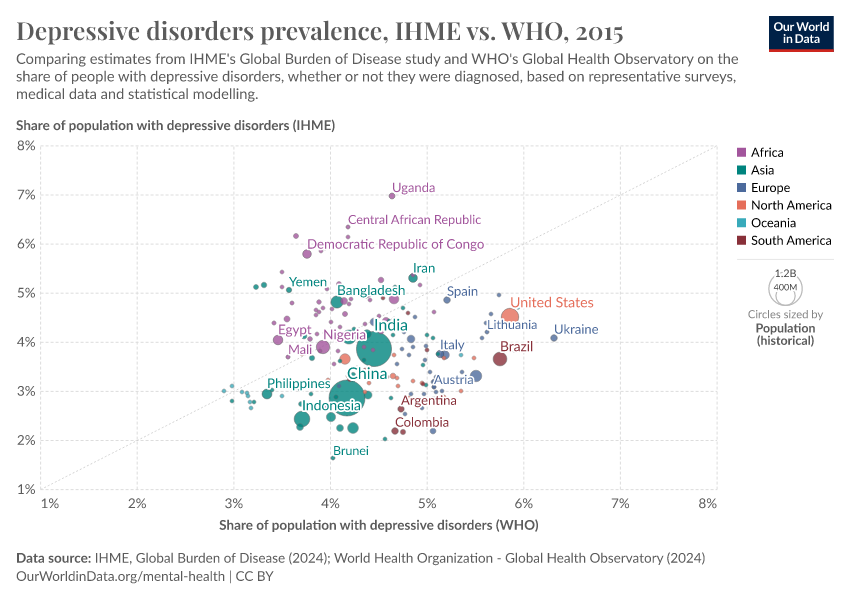
In this entry we have focused on data trends published by the Institute of Health Metrics (IHME) Global Burden of Disease study. This is currently the only source which provides estimates for all countries over time, and across the full range of mental health and substance use disorders. The World Health Organization (WHO) publish estimates on depression only; the comparison of depression prevalence from IHME versus WHO is shown in the scatter plot below.
A range of national sources also publish estimated prevalence of depression. In many cases, the 'boundaries', or category differentiation in mental health disorders is different from IHME estimates. They are often therefore not directly comparable. For example, the Center for Diseases Control (CDC) in the United States provides information and estimates on combined depression and anxiety disorders, treating anxiety as a subset of depression.
IV. Data Sources
Institute of Health Metrics and Evaluation (IHME), Global Burden of Disease (GBD)
- Data: Deaths, DALYs and prevalence of mental health and substance use disorders, by age and sex
- Geographical coverage: Global by country and region
- Time span: 1990 - 2016
- Available at: http://ghdx.healthdata.org/gbd-results-tool
World Health Organization (WHO) International Classification of Diseases (ICD)
World Health Organization. (1992). The ICD-10 classification of mental and behavioural disorders: clinical descriptions and diagnostic guidelines (Vol. 1). World Health Organization.
- Data: Definitions and classifications of mental and substance use disorders
- Available at: ICD-10 Classification of Mental and Behavioural Disorders
World Health Organization (WHO) Global Health Observatory (GHO)
- Data: Prevalence of depression
- Geographical coverage: Global by country
- Time span: 2015
- Available at: WHO Global Health Observatory (GHO)
V. Further resources & guidance
Suicide.org
- Information: Suicide prevention, awareness and support in addition to support on a range of mental health disorders
- Available at: http://suicide.org/
Online Support Groups
- Information: Free online support groups for individuals with a range of mental health, substance use and neurodevelopmental disorders (among other health conditions)
- Available at: https://online.supportgroups.com/
Center for Diseases Control and Prevention (CDC)
- Information: Guidance and support on depression and anxiety.
- Available at: https://www.cdc.gov/tobacco/campaign/tips/diseases/depression-anxiety.html
Center for Diseases Control and Prevention (CDC)
- Information: Factsheets on mental health
- Available at: https://www.cdc.gov/nchs/fastats/mental-health.htm
Centre for Global Mental Health
- Information: Research, education and project on closing inequities in mental health treatment
- Available at: https://www.centreforglobalmentalhealth.org/
Movement for Global Mental Health (MGMH)
- Information: Global network of individuals and organisations aiming to provide global coverage of mental health services
- Available at: http://www.globalmentalhealth.org//