


What you should know about this indicator
In countries hit by a humanitarian crisis, the UN IGME fits its trend with the crisis years set aside and then adds the crisis deaths back, so a few countries show a sharp one-year spike: Rwanda in 1994, Somalia in 2011, the Central African Republic in 2009, 2019 and 2022. For the Central African Republic these come from mortality surveys compiled by Gang et al. (2023). They are all-cause excess deaths, added for the years each survey was run rather than spread across the longer period the surveys point to.
Explore charts that include this data
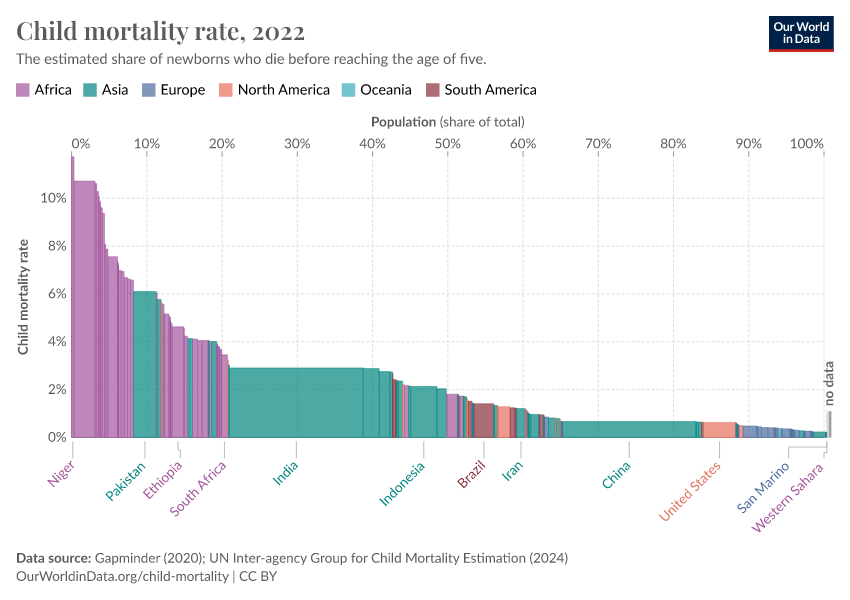

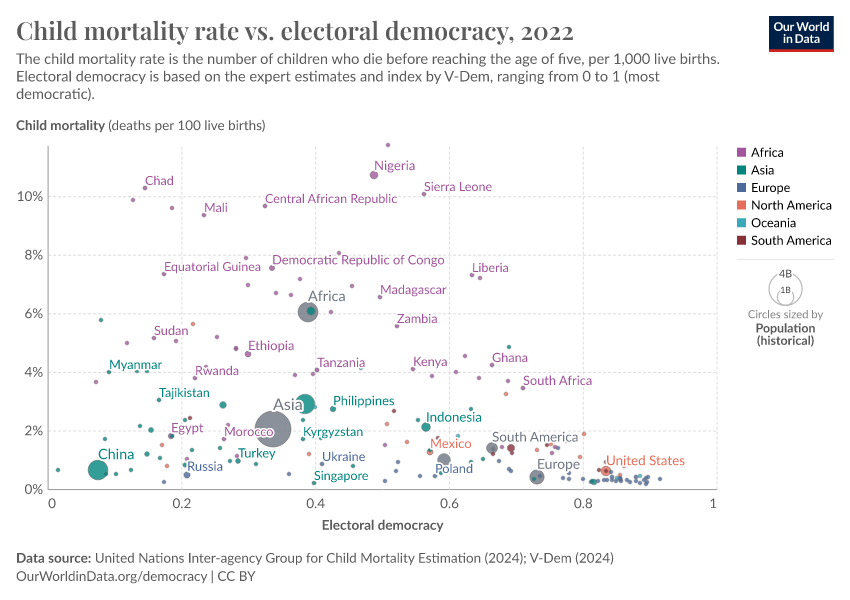

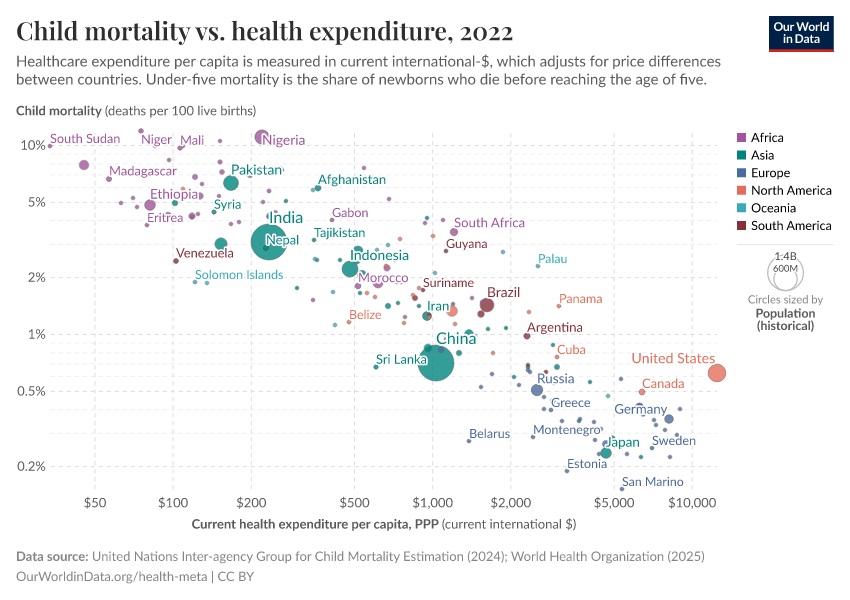
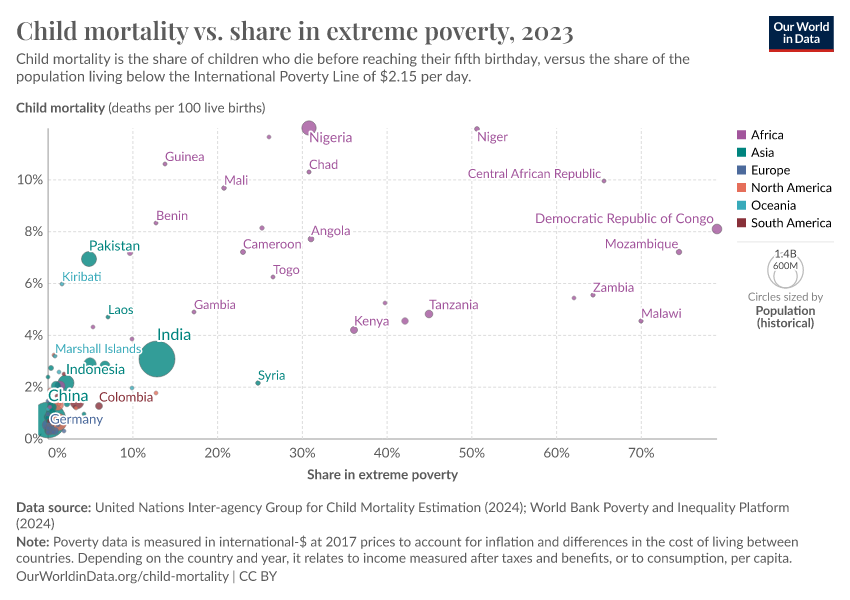
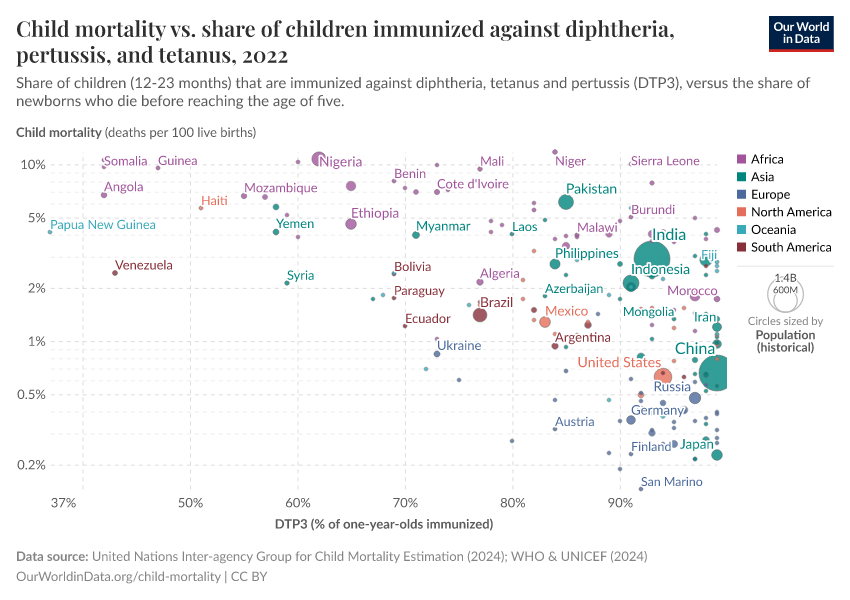
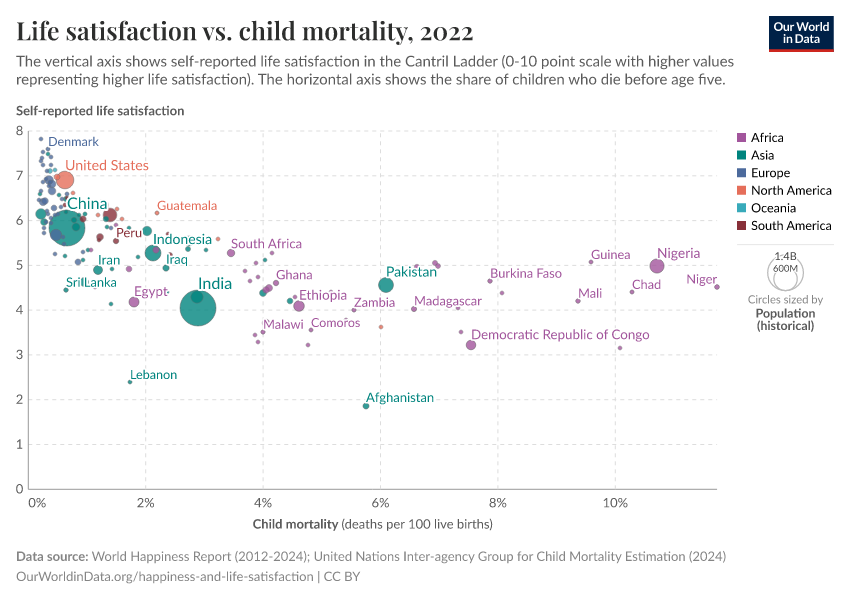
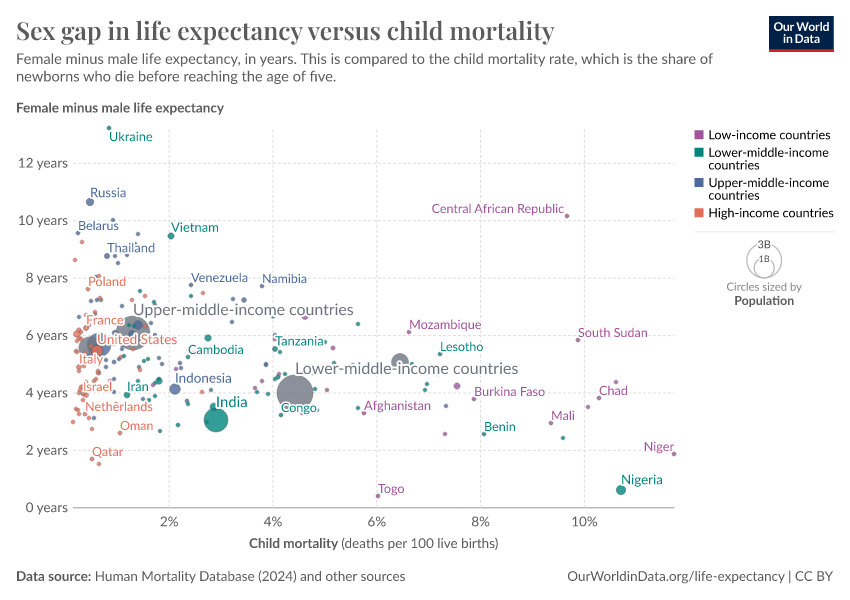

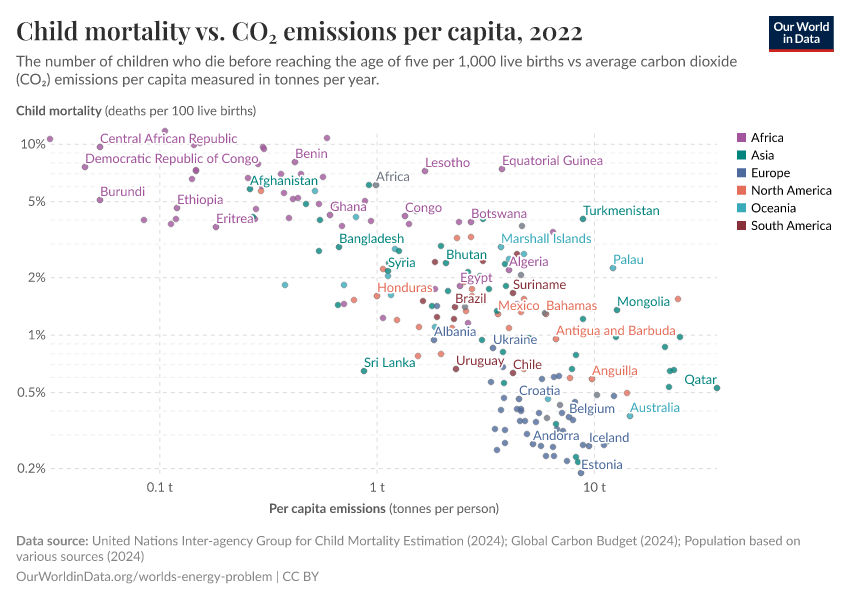
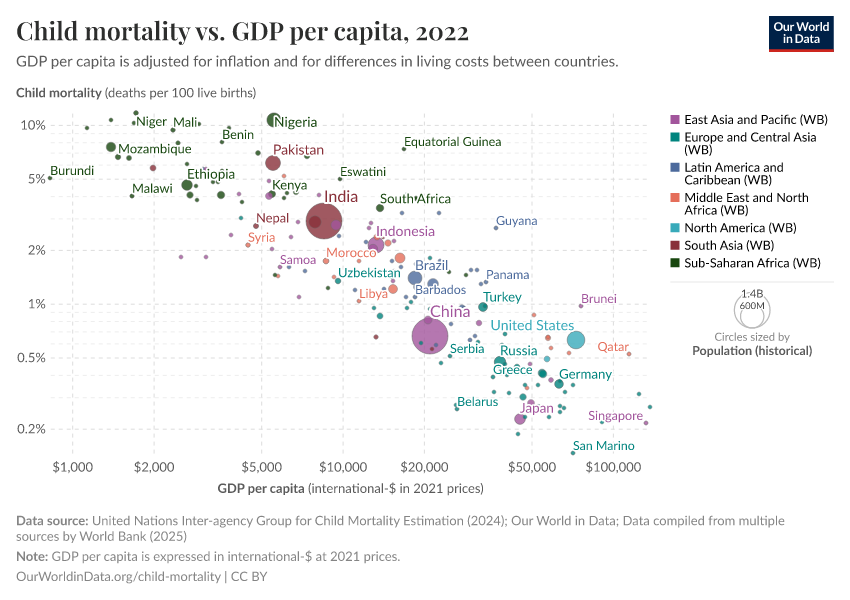
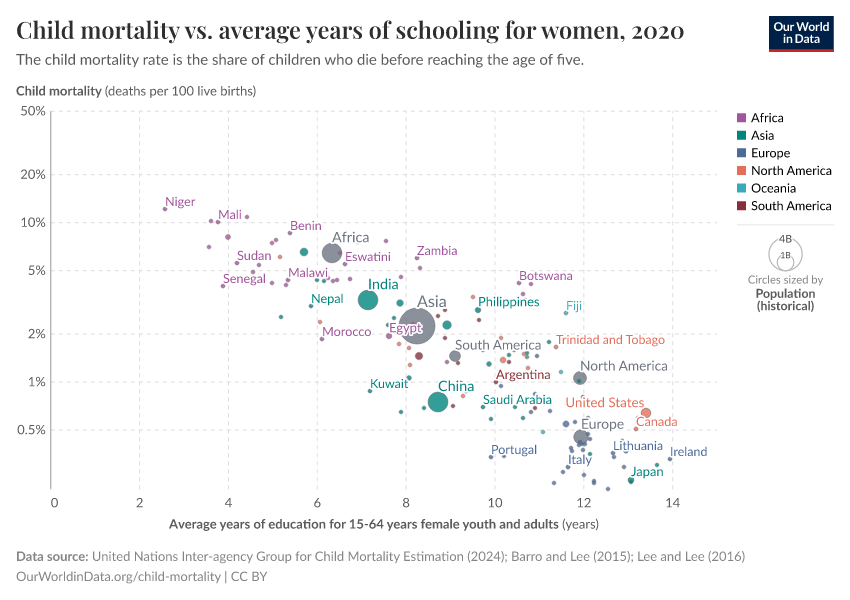


More Data on Child & Infant Mortality
Sources and processing
This data is based on the following sources
How we process data at Our World in Data
All data and visualizations on Our World in Data rely on data sourced from one or several original data providers. Preparing this original data involves several processing steps. Depending on the data, this can include standardizing country names and world region definitions, converting units, calculating derived indicators such as per capita measures, as well as adding or adapting metadata such as the name or the description given to an indicator.
At the link below you can find a detailed description of the structure of our data pipeline, including links to all the code used to prepare data across Our World in Data.
Notes on our processing step for this indicator
Aggregate measures for continents are calculated by Our World in Data, using our definition of the continents found here.
We do this by calculating a weighted average from the national rates, using the respective denominators (e.g. live births or children under 5) as weights.
Reuse this work
Citations
How to cite this page
To cite this page overall, including any descriptions, FAQs or explanations of the data authored by Our World in Data, please use the following citation:
“Data Page: Child mortality rate”, part of the following publication: Saloni Dattani, Fiona Spooner, Hannah Ritchie, and Max Roser (2023) - “Child and Infant Mortality”. Data adapted from United Nations Inter-agency Group for Child Mortality Estimation. Retrieved from https://archive.ourworldindata.org/20260904-080400/grapher/child-mortality-igme.html [online resource] (archived on September 4, 2026).How to cite this data
In-line citationIf you have limited space (e.g. in data visualizations), you can use this abbreviated in-line citation:
United Nations Inter-agency Group for Child Mortality Estimation (2025) – processed by Our World in DataFull citation
United Nations Inter-agency Group for Child Mortality Estimation (2025) – processed by Our World in Data. “Child mortality rate – UN IGME” [dataset]. United Nations Inter-agency Group for Child Mortality Estimation, “United Nations Inter-agency Group for Child Mortality Estimation 2025” [original data]. Retrieved September 28, 2026 from https://archive.ourworldindata.org/20260904-080400/grapher/child-mortality-igme.html (archived on September 4, 2026).Download
Quick download
Download the data shown in this chart as a ZIP file containing a CSV file, metadata in JSON format, and a README. The CSV file can be opened in Excel, Google Sheets, and other data analysis tools.
Data API
Use these URLs to programmatically access this chart's data and configure your requests with the options below. Our documentation provides more information on how to use the API, and you can find a few code examples below.
Data URL (CSV format)
https://ourworldindata.org/grapher/child-mortality-igme.csv?v=1&csvType=full&useColumnShortNames=falseMetadata URL (JSON format)
https://ourworldindata.org/grapher/child-mortality-igme.metadata.json?v=1&csvType=full&useColumnShortNames=falseExcel / Google Sheets
=IMPORTDATA("https://ourworldindata.org/grapher/child-mortality-igme.csv?v=1&csvType=full&useColumnShortNames=false")Python with Pandas
import pandas as pd
import requests

# Fetch the data.
df = pd.read_csv("https://ourworldindata.org/grapher/child-mortality-igme.csv?v=1&csvType=full&useColumnShortNames=false", storage_options = {'User-Agent': 'Our World In Data data fetch/1.0'})

# Fetch the metadata
metadata = requests.get("https://ourworldindata.org/grapher/child-mortality-igme.metadata.json?v=1&csvType=full&useColumnShortNames=false").json()
R
library(jsonlite)

# Fetch the data
df <- read.csv("https://ourworldindata.org/grapher/child-mortality-igme.csv?v=1&csvType=full&useColumnShortNames=false")

# Fetch the metadata
metadata <- fromJSON("https://ourworldindata.org/grapher/child-mortality-igme.metadata.json?v=1&csvType=full&useColumnShortNames=false")
Stata
import delimited "https://ourworldindata.org/grapher/child-mortality-igme.csv?v=1&csvType=full&useColumnShortNames=false", encoding("utf-8") clear